Category: Corporate Finance & Strategic Management

  • [Solved] journal #3

    ✓ Verified Academic Solution Available

    Executive Solution Overview

    [>Accounting homework help](https://www.sweetstudy.com/fields/business-finance-accounting) For each journal entry, you will reflect on and synthesize that week's assigned readings and videos. These journals are a space to think through what you are learning in class. This is not a formal . Your jour…

    Instant Solution Download

    $6.99

    Immediate access to the full model answer, formatted citations, and rubric breakdown.

    Need a Fresh Custom Paper?

    Have this question answered from scratch according to your specific instructions and deadline.

    Order on TutorsGallery →

    Assignment Prompt & Instructions

    [>Accounting homework help](https://www.sweetstudy.com/fields/business-finance-accounting)

    For each journal entry, you will reflect on and synthesize that week's assigned readings and videos. These journals are a space to think through what you are learning in class. This is not a formal . Your journal should be a place for you to work through ideas, ask questions, and make connections between the course learning materials (assigned readings, lecture videos, discussion boards, etc.) and the world around you.

    Use your journal to:

    – Compare and contrast the different feminist theories and frameworks you're reading about, and consider how they help explain the lived experiences of Chicanas/Latinas in the U.S., the Caribbean, and Latin America
    – Connect course concepts to current events, media, your own observations, and lived experiences
    – Reflect on how gender intersects with race, ethnicity, national origin, immigration status, social class, and sexuality in the readings, and what these intersections reveal about power, privilege, and oppression
    – Grapple with ideas that challenge you, confuse you, or that you disagree with, and explain why or which parts you disagree with or are confused by
    – Ask questions

    Writing regularly will help you process what you're reading and start formulating your own thoughts, ideas, and opinions related to gender, identity, power structures, and feminist movements.

    ### **Gender, sex, and Sexual orientation**

    Gender, sex, and sexual orientation are terms that are often misunderstood or conflated in society. It is important that we understand the nuance of these terms and the ways in which they have been defined and shaped by culture and history.

    In week 1, we discussed the meaning of gender and were provided with the following definition: **Gender** – Socially constructed roles created by society that define how people should act based on their sex designation. We are given a gender binary – told there are only two gender options, man and woman. In reality, there are infinite genders and infinite ways to express gender identity.

    Now let's take a closer look to understand the difference between gender identity and gender expression

    – **Gender Identity:** our personal sense of what our own gender is
    – **Gender Expression:** The way in which people present or express their gender, which can include factors such as physical appearance, clothing, hairstyles, or behavior.

    So what is the difference between sex and gender? In week 1, you were provided with the following definition of sex: **Sex**- Refers to the designation given by doctors/medical professionals, usually at birth, based on biological and physiological characteristics, usually centered around genitalia.

    When we are born, a doctor assigns us a sex. This has to do with our biology, chromosomes, and physical body. But even sex is more

    complex than that, and it really exists on a spectrum. For example, a newborn baby might have physical or biological traits that do not fit neatly into either category of male or female. These individuals are intersex.

    It is important to remember that sex and gender are completely distinct categories. The sex you are assigned at birth does not dictate the gender you will identify with as an adult. However, due to societal norms, once a baby is identified as male or female, it is typically expected to identify with one of two binary genders (man or woman) that correlates with their sex designation (male or female). Some folks never question their assigned gender based on the sex they were assigned at birth, and that's called being "cisgender." However, there are plenty of folks who do question their assigned gender, and that's completely normal and OK too.

    In week 1, you were also provided with a definition for sexual orientation: **Sexual Orientation** – The scientifically accurate term for a person’s enduring physical, romantic and/ or emotional attraction to another person. Sexual orientations can include heterosexual (straight), lesbian, gay, bisexual, queer, asexual, and other orientations. Avoid the offensive term “sexual preference,” which is used to inaccurately suggest that being gay, lesbian, or bisexual is voluntary and “curable.” The following video, created by True Colors United, provides us with a very helpful, visual representation of the differences between gender, sex, and sexual orientation.

    ### **Social Constructionism**

    Our definition of gender states that gender is socially constructed, but what is social construction? How do things such as gender become social constructions? To help us understand these questions, we must first understand the theory of social constructionism.

    The following paragraph is an excerpt from the OER textbook, [Introduction to Women, Gender Sexuality StudiesLinks to an external site.](https://openbooks.library.umass.edu/introwgss/chapter/social-constructionism/) written by Miliann Kang, Donovan Lessard, Laura Heston, and Sonny Nordmarken.

    " **Social constructionism** is a theory of knowledge that holds that characteristics typically thought to be immutable and solely biological—such as gender, race, class, ability, and sexuality—are products of human definition and interpretation shaped by cultural and historical contexts (Subramaniam 2010). As such, social constructionism highlights the ways in which cultural categories—like “men,” “women,” “black,” “white”—are concepts created, changed, and reproduced through historical processes within institutions and culture. We do not mean to say that bodily variation among individuals does not exist, but that we construct categories based on certain bodily features, we attach meanings to these categories, and then we place people into the categories by considering their bodies or bodily aspects. For example, by the one-drop rule (see also page 35), regardless of their appearance, individuals with any African ancestor are considered black. In contrast, racial conceptualization and thus racial categories are different in Brazil, where many individuals with African ancestry are considered to be white. This shows how identity categories are not based on strict biological characteristics, but on the social perceptions and meanings that are assumed. Categories are not “natural” or fixed and the boundaries around them are always shifting—they are contested and redefined in different historical periods and across different societies. Therefore, the social constructionist perspective is concerned with the _meaning_ created through defining and categorizing groups of people, experience, and reality in cultural contexts."

    [Introduction to Women, Gender, Sexuality StudiesLinks to an external site.](https://openbooks.library.umass.edu/introwgss) by Miliann Kang, Donovan Lessard, Laura Heston, Sonny Nordmarken is licensed under a [Creative Commons Attribution 4.0 International LicenseLinks to an external site.](https://creativecommons.org/licenses/by/4.0/),

    ### **Gender Binary**

    The gender binary is a social construction and a term you will hear often throughout this course. It is important to understand that the gender binary is not the only false binary or example of harmful binary thinking present in our society.

    The following paragraph is an excerpt from the OER textbook, [Introduction to Women, Gender, Sexuality StudiesLinks to an external site.](https://openbooks.library.umass.edu/introwgss/chapter/social-constructionism/), written by Miliann Kang, Donovan Lessard, Laura Heston, and Sonny Nordmarken.

    "Black and white. Masculine and feminine. Rich and poor. Straight and gay. Able-bodied and disabled. **Binaries** are social constructs composed of two parts that are framed as absolute and unchanging opposites. **Binary systems** reflect the integration of these oppositional ideas into our culture. This results in an exaggeration of differences between social groups until they seem to have nothing in common. An example of this is the phrase “men are from Mars, women are from Venus.” Ideas of men and women being complete opposites invite simplistic comparisons that rely on stereotypes: men are practical, women are emotional; men are strong, women are weak; men lead, women support. Binary notions mask the complicated realities and variety in the realm of social identity. They also erase the existence of individuals, such as multiracial or mixed-race people and people with non-binary gender identities, who may identify with neither of the assumed categories or with multiple categories. We know very well that men have emotions and that women have physical strength, but a binary perspective of gender prefigures men and women to have nothing in common. They are defined against each other; men are defined, in part, as “not women” and women as “not men.” Thus, our understandings of men are influenced by our understandings of women. Rather than seeing aspects of identity like race, gender, class, ability, and sexuality as containing only two dichotomous, opposing categories, conceptualizing multiple various identities allows us to examine how men and women, Black and white, etc., may not be so completely different after all, and how varied and complex identities and lives can be."

    [Introduction to Women, Gender, Sexuality StudiesLinks to an external site.](https://openbooks.library.umass.edu/introwgss) by Miliann Kang, Donovan Lessard, Laura Heston, Sonny Nordmarken is licensed under a [Creative Commons Attribution 4.0 International LicenseLinks to an external site.](https://creativecommons.org/licenses/by/4.0/),

    ### **Traditional Gender Roles or Gender Norms**

    Traditional gender roles and gender norms are also social constructs. **Gender norms** are the expectations society places on us based on our gender. For example, because I am a woman, society expects me to care about and keep up with my physical appearance in ways that are deemed feminine, such as doing my hair or putting on makeup. Another example of gender norms in action is in two common phrases, "boys will be boys" and "boys don't cry". These two phrases carry with them the expectation that it is natural for boys to misbehave and that boys are unemotional.

    Traditional **gender roles** are the behaviors and tasks that society expects us to do or take on based on our gender. For example, as a woman, I am expected to prioritize finding a man to marry and raising children. Based on my gender, it is also expected that I will do the majority of the housework, including cleaning and cooking. On the other hand, society expects men to take on the role of the "breadwinner" in the household. Society expects men to prioritize making money and working outside the home over child-rearing and housework.

    #### **Marianismo and Machismo**

    It is important to understand the concepts of marianismo and machismo and where they came from. These concepts are rooted in Spanish colonialism. **Machismo** is often understood as a form of hypermasculinity, based on traditional gender roles and gender norms.

    The following two definitions for marianismo and the virgin/whore complex are provided in the Chapter 5 glossary of your OER textbook, _New Directions in Chicanx and Latinx Studies_ by Amber Rose González. Conclusion. 10 Jan. 2024, https://socialsci.libretexts.org/@go/page/166505.

    **Virgin/Whore Complex:** An example of a dichotomy that was first imposed by the colonial Catholic Church during the Spanish conquest that constructed women as a ‘ _mujer_ _buena_’ or a _‘mujer mala._’ In modern times, this gendered cultural expectation about Chicana womanhood reinforces patriarchy, obliging Chicanas to take on the contradictory roles of obedient wife and mother and to also be sexually available.

    **Marianismo:** The narrative found on one side of the virgin/whore complex, which typifies the deep reverence for La Virgen de Guadalupe who is valued as the subservient all-suffering virgin mother.

    ### **Gender Inequality**

    These gendered expectations placed on us by society work together to create gender inequality. Gender inequality is the unequal access to resources, power, and opportunities between different genders.

    Gender inequality is also exacerbated by systemic oppression, such as sexism, which we read about in week 1.

    Last week, you read sections 4.1 and 4.2 from Chapter 4 of the OER textbook _, New Directions in Chicanx and Latinx Studies._ To begin week 6, we are picking back up with section 4.4 titled, [Gender, Sexuality, Migration, and Indigeneity.](https://socialsci.libretexts.org/Bookshelves/Ethnic_Studies/New_Directions_in_Chicanx_and_Latinx_Studies_(Gonzalez_et_al.)/04%3A_Indigeneities/4.04%3A_Gender_Sexuality_Migration_and_Indigeneity) Please read all of section 4.4 and watch the short embedded video titled, "A Queer Native Thanksgiving".

    This section will cover the following topics:

    – Gender Roles and Family Dynamics
    – Gender and Labor
    – Gender and Language
    – Two-Spirit Identities and Pan-Indigenous Solidarity
    – Queer and Trans Migration Experiences

    _A_ ssigned Reading: [4.4: Gender, Sexuality, Migration, and Indigeneity](https://socialsci.libretexts.org/Bookshelves/Ethnic_Studies/New_Directions_in_Chicanx_and_Latinx_Studies_(Gonzalez_et_al.)/04%3A_Indigeneities/4.04%3A_Gender_Sexuality_Migration_and_Indigeneity),Links to an external site.

    ### **Challenging the Gender Binary: The Muxes of Oaxaca, Mexico**

    Watch the short film by Ivan Olita below.

    "The latest documentary by Ivan Olita is a piece documenting the far reaches of the southern state of Oaxaca, where, in the Indigenous communities around the town of Juchitán, the world is not divided simply into males and females. The local Zapotec people have made room for a third category, which they call “muxes” – men who consider themselves women and live in a socially sanctioned limbo between the two genders."  Olita, Ivan. “Muxes.” _Vimeo_, 21 Dec. 2016, [https://vimeo.com/196684590Links to an external site.](https://vimeo.com/196684590).

    [Links to an external site.](https://vimeo.com/196684590) [Links to an external site.](https://vimeo.com/196684590)

    ### **Continuing to chapter 5: feminisms**

    In week 1, you read the introduction to Chapter 5, titled "The Roots and Routes of Chicana/Latina Feminisms". This week, we are continuing our conversation on Chicana and Latina feminisms as we read the rest of Chapter 5.

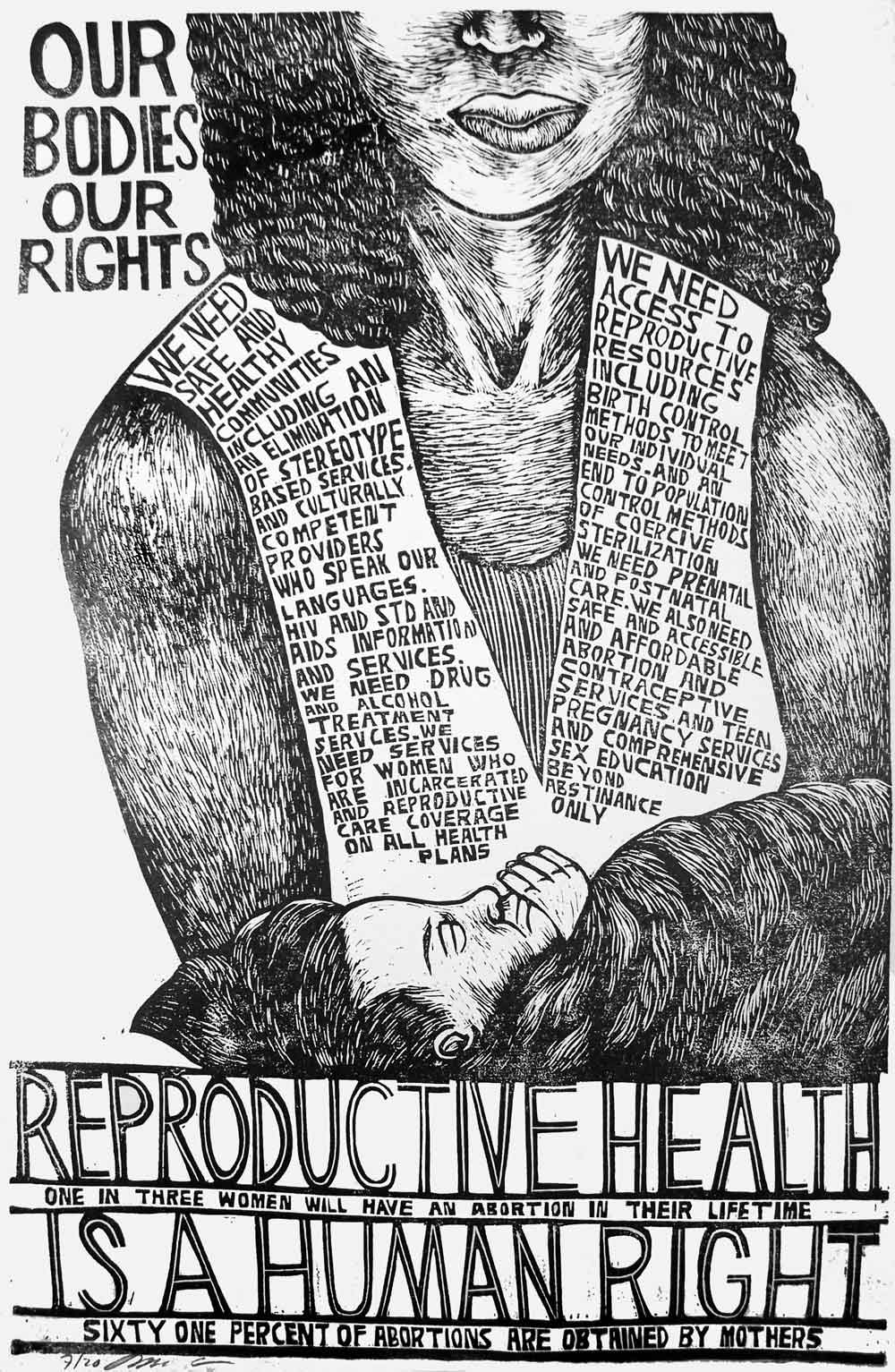
    First read section [5.2 Fighting for Economic Justice.Links to an external site.](https://socialsci.libretexts.org/Bookshelves/Ethnic_Studies/New_Directions_in_Chicanx_and_Latinx_Studies_(Gonzalez_et_al.)/05%3A_Feminisms/5.02%3A_Fighting_for_Economic_Justice) Next, read section [5.3 Reproductive JusticeLinks to an external site.](https://socialsci.libretexts.org/Bookshelves/Ethnic_Studies/New_Directions_in_Chicanx_and_Latinx_Studies_(Gonzalez_et_al.)/05%3A_Feminisms/5.03%3A_Reproductive_Justice).

    These two sections will cover the following topics:                                                                              ![](https://socialsci.libretexts.org/@api/deki/files/119528/5.3.1_Our_Bodies_Our_Rights.jpeg?revision=2&size=bestfit&width=450&height=690)
    – Labor Organizing
    – Welfare Rights
    – The Fight for Reproductive Justice
    – The History of Reproductive Injustice

    _A_ ssigned Reading:

    1. [5.2 Fighting for Economic Justice.Links to an external site.](https://socialsci.libretexts.org/Bookshelves/Ethnic_Studies/New_Directions_in_Chicanx_and_Latinx_Studies_(Gonzalez_et_al.)/05%3A_Feminisms/5.02%3A_Fighting_for_Economic_Justice)
    2. [Links to an external site.](https://socialsci.libretexts.org/Bookshelves/Ethnic_Studies/New_Directions_in_Chicanx_and_Latinx_Studies_(Gonzalez_et_al.)/05%3A_Feminisms/5.02%3A_Fighting_for_Economic_Justice) [5.3 Reproductive JusticeLinks to an external site.](https://socialsci.libretexts.org/Bookshelves/Ethnic_Studies/New_Directions_in_Chicanx_and_Latinx_Studies_(Gonzalez_et_al.)/05%3A_Feminisms/5.03%3A_Reproductive_Justice)

    “ [Our Bodies Our RightsLinks to an external site.](https://justseeds.org/graphic/our-bodies-our-rights/)” by [Meredith SternLinks to an external site.](https://justseeds.org/artist/meredithstern/), [JustseedsLinks to an external site.](https://justseeds.org/) is licensed [CC BY-NC-ND 4.0](http://creativecommons.org/licenses/by-nc-nd/4.0).

    ### **Latinas in the Labor Movement**

    After you've finished reading the pages listed above, watch the following Time Magazine video from their series "The History You Didn't Learn" on the history of the important and integral contributions Latinas made to the labor movement. In this video, you will learn about the work of Latina labor organizers, Luisa Moreno and Emma Tenayuca-Brooks, who fought for workers' rights and paved the way for the famous labor organizer, Dolores Huerta, who would come to prominence roughly two decades later.

    This video is embedded in section 5.2 of your OER textbook.

    ### **Reflection Questions**

    As you read, take time to pause, reflect, and answer the following questions.

    1. How did Chicanas and Latinas challenge patriarchy, sexism, and homophobia in their ethnic nationalist movements and in the larger society?
    2. What are some of the key issues and movements that Chicana and Latina feminists have been involved in? What specific strategies did they utilize in their advocacy work?

  • [Solved] presentation

    ✓ Verified Academic Solution Available

    Executive Solution Overview

    [>Marketing homework help](https://www.sweetstudy.com/fields/business-finance-marketing) **files (1)** – ## Entrweek4pitch.docx **## Entrweek4pitch.docx** Here is the pitch: A — 60-second script (read at a steady pace; ~130–150 words) [00:00–00:03] Hi — I’m Kofi Thomas Amet, a retired USAF electri…

    Instant Solution Download

    $6.99

    Immediate access to the full model answer, formatted citations, and rubric breakdown.

    Need a Fresh Custom Paper?

    Have this question answered from scratch according to your specific instructions and deadline.

    Order on TutorsGallery →

    Assignment Prompt & Instructions

    [>Marketing homework help](https://www.sweetstudy.com/fields/business-finance-marketing)

    **files (1)**

    – ## Entrweek4pitch.docx

    **## Entrweek4pitch.docx**

    Here is the pitch:

    A — 60-second script (read at a steady pace; ~130–150 words)

    [00:00–00:03]

    Hi — I’m Kofi Thomas Amet, a retired USAF electrician, IT professional and Current State Farm Insurance producer.

    [00:04–00:18] Problem: Homeowners and small landlords are seeing sharply rising insurance premiums and surprise claims caused by hidden electrical and mechanical hazards — things like overloaded circuits, failing connections, and unseen HVAC or plumbing faults that spark costly fires or water damage.

    [00:19–00:36] Solution: We offer a 30–90 minute Smart Home Diagnostic Audit that combines thermal imaging, non‑invasive circuit testing, moisture and gas detection, and immediate low‑cost fixes. Within 24 hours we deliver an insurer‑ready digital report: risk score, time‑stamped evidence, and a remediation roadmap designed to qualify clients for premium discounts.

    [00:37–00:52] Why we’re qualified: My USAF electrician background gives me hands‑on electrical credibility; as a current State Farm producer I know underwriting thresholds and what carriers require; my IT and homeland‑security training ensures tamper‑proof, timestamped digital evidence that insurers trust.

    [00:53–00:60] Close: We reduce claims and lower premiums — fast. Book an audit at [Kofi Thomas Amet] and let us make your home safer and cheaper to insure.

    Please create a power point / on youtube here is an example:
    [https://www.youtube.com/watch?v=bue0S8s6hPs](https://www.youtube.com/watch?v=bue0S8s6hPs)

    [https://youtu.be/CojAZ7c4bDw\
    Links to an external site.](https://youtu.be/CojAZ7c4bDw)

    Post 1) a link to a YouTube video containing a 60 second pitch of your MVP and 2) that same link to the relevant discussion forum.

    In order to exceed standards for this assignment, your pitch must 1) thoroughly explain the problem you are trying to solve, 2) demonstrate how the proposed new product/service solves that problem in a distinctive and feasible way, and 3) articulates the characteristics/attributes, knowledge/skills and networks that you bring to this product launch. In order to meet standards, your pitch must 1) explain adequately two of the following three: the problem, solution, and your fit with the product launch. Presentations that do not adequately explain at least two of the three elements (problem, solution, you) will not meet standards for this assignment. The persuasiveness of your presentation will also be a part of the assessment.

    MVPs must be VIABLE and WORKING at a basic level in order to receive a grade of 70 or higher. s

  • [Solved] geog

    ✓ Verified Academic Solution Available

    Executive Solution Overview

    [>Economics homework help](https://www.sweetstudy.com/fields/business-finance-economics) ## **Adiabatic Process – Instructions** **Refer to this week's mini-lectures, Units 6-7 from the OER textbook, and watch the short video below to observe an adequate visual for the adiabatic process.** 1. Explai…

    Instant Solution Download

    $6.99

    Immediate access to the full model answer, formatted citations, and rubric breakdown.

    Need a Fresh Custom Paper?

    Have this question answered from scratch according to your specific instructions and deadline.

    Order on TutorsGallery →

    Assignment Prompt & Instructions

    [>Economics homework help](https://www.sweetstudy.com/fields/business-finance-economics)

    ## **Adiabatic Process – Instructions**

    **Refer to this week's mini-lectures, Units 6-7 from the OER textbook, and watch the short video below to observe an adequate visual for the adiabatic process.**

    1. Explain what happens in the process of adiabatic cooling.
    2. Then explain the effect Evaporation can have on the adiabatic process.  Lastly, explain how adiabatic temperature changes may lead to a change in relative humidity.

    https://youtu.be/XH_M4jItiKw

    **Assignment Requirements:**

    – Explain in detail and concisely with one-two paragraph, between **250-300 words**.  Point deductions will be made if the word limitations are not upheld.
    – Maximum points will be awarded if the questions are answered accurately, with appropriate grammar, and answered within the guidelines established.
    – Please proofread all your work prior to submissions.  I will be actively observing plagiarizing and the use of AI tools.

  • [Solved] dis #4

    ✓ Verified Academic Solution Available

    Executive Solution Overview

    [>Management homework help](https://www.sweetstudy.com/fields/business-finance-management) **Refer to this week's mini-lectures, Units 7 from the OER textbook, and watch the video below for information regarding the driving forces of weather and climate on earth.** 1. First, discuss what is the prim…

    Instant Solution Download

    $6.99

    Immediate access to the full model answer, formatted citations, and rubric breakdown.

    Need a Fresh Custom Paper?

    Have this question answered from scratch according to your specific instructions and deadline.

    Order on TutorsGallery →

    Assignment Prompt & Instructions

    [>Management homework help](https://www.sweetstudy.com/fields/business-finance-management)

    **Refer to this week's mini-lectures, Units 7 from the OER textbook, and watch the video below for information regarding the driving forces of weather and climate on earth.**

    1. First, discuss what is the primary driving force for driving weather & climate on earth?
    2. Then explain how this driving force, along with variations in heat energy distributed upon earth, influences climate in the equatorial, mid-latitudinal & polar regions of the earth.  Be specific, use any number of regions or places on earth as example.  (Hint: think of storm systems, precipitation variation, biodiversity or lack thereof, landscapes, etc.)

    https://youtu.be/6vgvTeuoDWY

    **Discussion Requirements:**

    – Post at least one thread response to the questions posed and one response to your fellow classmates posts with a coherent, thorough and relevant perspective to receive full credit.
    – Initial post to the questions posed should be between **200-250 words**

  • [Solved] Week 5 Discussion- Capstone

    ✓ Verified Academic Solution Available

    Executive Solution Overview

    **files (2)** – ## Week5DiscussionInstructions-Capstone.docx – ## Week5LearningResources-Capstone.docx **## Week5DiscussionInstructions-Capstone.docx** **Week 5 Discussion** **Capstone** **Healthy Organizational Practices** When it comes to deciding whether to work for or interact with an organizati…

    Instant Solution Download

    $6.99

    Immediate access to the full model answer, formatted citations, and rubric breakdown.

    Need a Fresh Custom Paper?

    Have this question answered from scratch according to your specific instructions and deadline.

    Order on TutorsGallery →

    Assignment Prompt & Instructions

    **files (2)**

    – ## Week5DiscussionInstructions-Capstone.docx

    – ## Week5LearningResources-Capstone.docx

    **## Week5DiscussionInstructions-Capstone.docx**

    **Week 5 Discussion**

    **Capstone**

    **Healthy Organizational Practices**

    When it comes to deciding whether to work for or interact with an organization, many individuals are influenced by the organization’s culture. For example, a company might pay well, operate in a competitive field, and offer great benefits, but a toxic culture might cause employees and managers to leave at higher rates than normal. On the other hand, an organization might handle extremely difficult or dangerous work but is comprised of employees who are loyal because they care for and appreciate the work culture. In this Discussion, you will explore examples of healthy and unhealthy cultures in organizations and consider the practices that contribute to the health of those organizations.

    **To prepare for this Discussion:**

    · From personal experience or public reputation, consider examples of organizations with healthy or unhealthy corporate cultures. Identify examples of business practices that are reflective of organizational health (and those that are not). You may use examples from your own experience or examples you have located through your own search.

    **Post** your synthesis of business practices reflective of organizational health, to include the following:

    · Identify at least one example of a healthy organizational culture and at least one example of an unhealthy organizational culture. For example, briefly describe the organization, being sure to avoid using real names of either the company or any individuals in your description.

    · For the health culture you described, identify at least two specific practices that contribute to the overall health of the organization, including a rationale to support your assertion.

    · For the unhealthy culture you described, identify the specific practices that detract from the overall health of the organization, including a rationale to support your assertion.

    · For each unhealthy practice identified, propose how it could be refocused or changed to yield more positive outcomes for the organization’s overall health.

    **## Week5LearningResources-Capstone.docx**

    **Week 5 Learning Resources**

    **Capstone**

    **What Is Healthy Organization?**

    How would you define a “healthy organization”? Many individuals would consider a healthy organization to be one that earns the most profits or maintains long-term stability, but additional factors should be considered. If those outcomes were achieved through dishonorable practices or an overloaded and underpaid workforce, then it is likely most people would reassess how “healthy” that organization was. Using the following resources, you will explore what it means to have a healthy organization.

    · Goldman, J. (2018, July 26).
    [_How to grow revenue and profit by focusing on organizational health_ Links to an external site.](https://www.inc.com/jeremy-goldman/to-grow-revenue-profit-focus-on-organizational-health.html). Inc.com. https://www.inc.com/jeremy-goldman/to-grow-revenue-profit-focus-on-organizational-health.html

    · HSMAmericas. (2010, September 22).
    [_Patrick Lencioni on the four disciplines of healthy organizations_ Links to an external site.](https://www.youtube.com/watch?v=SJAeFnd3QWE) [Video]. YouTube. https://www.youtube.com/watch?v=SJAeFnd3QWE

    · Lencioni, P. (2024, November 25).
    [_The six critical questions by Patrick Lencioni_ Links to an external site.](https://www.youtube.com/watch?v=cYMcvYPMzqk) [Video]. YouTube. https://www.youtube.com/watch?v=cYMcvYPMzqk

    · Starr, P. (2020, September).
    [Having it all: How to have both a healthy organization and strong performanceLinks to an external site.](https://search.ebscohost.com/login.aspx?direct=true&AuthType=shib&db=bth&AN=147607679&site=eds-live&scope=site&custid=s6527200).
    _Smart Business Cleveland_ ,
    _32_ (1), 20.

    **Healthy Corporate Culture**

    A crucial component of a healthy organization is its corporate culture. An organization can demonstrate its commitment to a healthy corporate culture by focusing on its employees’ and customers’ well-being. A healthy culture recognizes the common values that describe an organization’s objectives, which can lead to prosperity, organizational consistency, and a more engaged workforce. Through these resources, you will examine the components of a healthy organizational culture.

    · Bregman, P. (2009, June 25).
    [A good way to change a corporate culture](https://waldenu.instructure.com/courses/247046/external_tools/retrieve?url=https%3A%2F%2Fservices.hbsp.harvard.edu%2Flti%2Flinks%2FH003DV-PDF-ENG%2Frich-text).
    _Harvard Business Review Digital Articles_ , 2–4. http://hbr.org

    · Coleman, J. (2013, May 6).
    [Six components of a great corporate culture](https://waldenu.instructure.com/courses/247046/external_tools/retrieve?url=https%3A%2F%2Fservices.hbsp.harvard.edu%2Flti%2Flinks%2FH00AKN-PDF-ENG%2Frich-text).
    _Harvard Business Review Digital Articles_ , 2–4. http://hbr.org

    · Geller, L. W. (2017, January 30).
    [Why good employees do bad thingsLinks to an external site.](https://www.strategy-business.com/article/Why-Good-Employees-Do-Bad-Things). s
    _trategy+business_ , (87). https://www.strategy-business.com/article/Why-Good-Employees-Do-Bad-Things

    · Schwartz, M. S. (2013).
    [Developing and sustaining an ethical corporate culture: The core elementsLinks to an external site.](https://go.openathens.net/redirector/waldenu.edu?url=https://www.sciencedirect.com/science/article/pii/S0007681312001218?via=ihub).
    _Business Horizons_ ,
    _56_ (1), 39–50.
    [https://doi.org/10.1016/j.bushor.2012.09.002](https://doi.org/10.1016/j.bushor.2012.09.002)

    **Attributes of a Successful, Resilient Organization**

    How do you define a successful, resilient organization? More importantly, what can be done to create or sustain one? There are numerous variables to consider when answering these questions, and the answer may not always be clear. It is unlikely that there is a single approach that will solve every inevitable issue that organizations will face. While one approach may not solve every problem, combining multiple, time-tested business practices can improve the likelihood of success. Using these resources, you will explore what factors are important for a successful and resilient organization.

    · Borg, L. (2020, July 17).
    [_The essential role of agility in business success_ Links to an external site.](https://www.linkedin.com/pulse/essential-role-agility-business-success-lori-borg/?articleId=6689919463724331008). LinkedIn. https://www.linkedin.com/pulse/essential-role-agility-business-success-lori-borg/?articleId=6689919463724331008

    · Cook, C. (2025, June 23).
    [_13 characteristics of a successful businessLinks to an external site._](https://www.uschamber.com/co/start/strategy/successful-businesses-common-characteristics). U.S. Chamber of Commerce. https://www.uschamber.com/co/start/strategy/successful-businesses-common-characteristics

    · Suarez, F. F., & Montes, J. S. (2020).
    [Building organizational resilience](https://waldenu.instructure.com/courses/247046/external_tools/retrieve?url=https%3A%2F%2Fservices.hbsp.harvard.edu%2Flti%2Flinks%2FS20062-PDF-ENG%2Frich-text).
    _Harvard Business Review_ ,
    _98_ (6), 47–52.

    · Teece, D. J., Raspin, P. G., & Cox, D. R. (2020, September 8).
    [Plotting strategy in a dynamic worldLinks to an external site.](https://www.proquest.com/scholarly-journals/plotting-strategy-dynamic-world/docview/2450654678/se-2?accountid=14872).
    _MIT Sloan Management Review_ ,
    _62_ (1), 28–33.

    · Thiemann, M. (2021, February 4).
    [_Why is agility so important to the success of companies?_ Links to an external site.](https://www.forbes.com/sites/forbescoachescouncil/2021/02/04/why-is-agility-so-important-to-the-success-of-companies/?sh=1c750a956f29) Forbes. https://www.forbes.com/sites/forbescoachescouncil/2021/02/04/why-is-agility-so-important-to-the-success-of-companies/?sh=1c750a956f29

    **## Week5DiscussionInstructions-Capstone.docx**

    **Week 5 Discussion**

    **Capstone**

    **Healthy Organizational Practices**

    When it comes to deciding whether to work for or interact with an organization, many individuals are influenced by the organization’s culture. For example, a company might pay well, operate in a competitive field, and offer great benefits, but a toxic culture might cause employees and managers to leave at higher rates than normal. On the other hand, an organization might handle extremely difficult or dangerous work but is comprised of employees who are loyal because they care for and appreciate the work culture. In this Discussion, you will explore examples of healthy and unhealthy cultures in organizations and consider the practices that contribute to the health of those organizations.

    **To prepare for this Discussion:**

    · From personal experience or public reputation, consider examples of organizations with healthy or unhealthy corporate cultures. Identify examples of business practices that are reflective of organizational health (and those that are not). You may use examples from your own experience or examples you have located through your own search.

    **Post** your synthesis of business practices reflective of organizational health, to include the following:

    · Identify at least one example of a healthy organizational culture and at least one example of an unhealthy organizational culture. For example, briefly describe the organization, being sure to avoid using real names of either the company or any individuals in your description.

    · For the health culture you described, identify at least two specific practices that contribute to the overall health of the organization, including a rationale to support your assertion.

    · For the unhealthy culture you described, identify the specific practices that detract from the overall health of the organization, including a rationale to support your assertion.

    · For each unhealthy practice identified, propose how it could be refocused or changed to yield more positive outcomes for the organization’s overall health.

    **## Week5LearningResources-Capstone.docx**

    **Week 5 Learning Resources**

    **Capstone**

    **What Is Healthy Organization?**

    How would you define a “healthy organization”? Many individuals would consider a healthy organization to be one that earns the most profits or maintains long-term stability, but additional factors should be considered. If those outcomes were achieved through dishonorable practices or an overloaded and underpaid workforce, then it is likely most people would reassess how “healthy” that organization was. Using the following resources, you will explore what it means to have a healthy organization.

    · Goldman, J. (2018, July 26).
    [_How to grow revenue and profit by focusing on organizational health_ Links to an external site.](https://www.inc.com/jeremy-goldman/to-grow-revenue-profit-focus-on-organizational-health.html). Inc.com. https://www.inc.com/jeremy-goldman/to-grow-revenue-profit-focus-on-organizational-health.html

    · HSMAmericas. (2010, September 22).
    [_Patrick Lencioni on the four disciplines of healthy organizations_ Links to an external site.](https://www.youtube.com/watch?v=SJAeFnd3QWE) [Video]. YouTube. https://www.youtube.com/watch?v=SJAeFnd3QWE

    · Lencioni, P. (2024, November 25).
    [_The six critical questions by Patrick Lencioni_ Links to an external site.](https://www.youtube.com/watch?v=cYMcvYPMzqk) [Video]. YouTube. https://www.youtube.com/watch?v=cYMcvYPMzqk

    · Starr, P. (2020, September).
    [Having it all: How to have both a healthy organization and strong performanceLinks to an external site.](https://search.ebscohost.com/login.aspx?direct=true&AuthType=shib&db=bth&AN=147607679&site=eds-live&scope=site&custid=s6527200).
    _Smart Business Cleveland_ ,
    _32_ (1), 20.

    **Healthy Corporate Culture**

    A crucial component of a healthy organization is its corporate culture. An organization can demonstrate its commitment to a healthy corporate culture by focusing on its employees’ and customers’ well-being. A healthy culture recognizes the common values that describe an organization’s objectives, which can lead to prosperity, organizational consistency, and a more engaged workforce. Through these resources, you will examine the components of a healthy organizational culture.

    · Bregman, P. (2009, June 25).
    [A good way to change a corporate culture](https://waldenu.instructure.com/courses/247046/external_tools/retrieve?url=https%3A%2F%2Fservices.hbsp.harvard.edu%2Flti%2Flinks%2FH003DV-PDF-ENG%2Frich-text).
    _Harvard Business Review Digital Articles_ , 2–4. http://hbr.org

    · Coleman, J. (2013, May 6).
    [Six components of a great corporate culture](https://waldenu.instructure.com/courses/247046/external_tools/retrieve?url=https%3A%2F%2Fservices.hbsp.harvard.edu%2Flti%2Flinks%2FH00AKN-PDF-ENG%2Frich-text).
    _Harvard Business Review Digital Articles_ , 2–4. http://hbr.org

    · Geller, L. W. (2017, January 30).
    [Why good employees do bad thingsLinks to an external site.](https://www.strategy-business.com/article/Why-Good-Employees-Do-Bad-Things). s
    _trategy+business_ , (87). https://www.strategy-business.com/article/Why-Good-Employees-Do-Bad-Things

    · Schwartz, M. S. (2013).
    [Developing and sustaining an ethical corporate culture: The core elementsLinks to an external site.](https://go.openathens.net/redirector/waldenu.edu?url=https://www.sciencedirect.com/science/article/pii/S0007681312001218?via=ihub).
    _Business Horizons_ ,
    _56_ (1), 39–50.
    [https://doi.org/10.1016/j.bushor.2012.09.002](https://doi.org/10.1016/j.bushor.2012.09.002)

    **Attributes of a Successful, Resilient Organization**

    How do you define a successful, resilient organization? More importantly, what can be done to create or sustain one? There are numerous variables to consider when answering these questions, and the answer may not always be clear. It is unlikely that there is a single approach that will solve every inevitable issue that organizations will face. While one approach may not solve every problem, combining multiple, time-tested business practices can improve the likelihood of success. Using these resources, you will explore what factors are important for a successful and resilient organization.

    · Borg, L. (2020, July 17).
    [_The essential role of agility in business success_ Links to an external site.](https://www.linkedin.com/pulse/essential-role-agility-business-success-lori-borg/?articleId=6689919463724331008). LinkedIn. https://www.linkedin.com/pulse/essential-role-agility-business-success-lori-borg/?articleId=6689919463724331008

    · Cook, C. (2025, June 23).
    [_13 characteristics of a successful businessLinks to an external site._](https://www.uschamber.com/co/start/strategy/successful-businesses-common-characteristics). U.S. Chamber of Commerce. https://www.uschamber.com/co/start/strategy/successful-businesses-common-characteristics

    · Suarez, F. F., & Montes, J. S. (2020).
    [Building organizational resilience](https://waldenu.instructure.com/courses/247046/external_tools/retrieve?url=https%3A%2F%2Fservices.hbsp.harvard.edu%2Flti%2Flinks%2FS20062-PDF-ENG%2Frich-text).
    _Harvard Business Review_ ,
    _98_ (6), 47–52.

    · Teece, D. J., Raspin, P. G., & Cox, D. R. (2020, September 8).
    [Plotting strategy in a dynamic worldLinks to an external site.](https://www.proquest.com/scholarly-journals/plotting-strategy-dynamic-world/docview/2450654678/se-2?accountid=14872).
    _MIT Sloan Management Review_ ,
    _62_ (1), 28–33.

    · Thiemann, M. (2021, February 4).
    [_Why is agility so important to the success of companies?_ Links to an external site.](https://www.forbes.com/sites/forbescoachescouncil/2021/02/04/why-is-agility-so-important-to-the-success-of-companies/?sh=1c750a956f29) Forbes. https://www.forbes.com/sites/forbescoachescouncil/2021/02/04/why-is-agility-so-important-to-the-success-of-companies/?sh=1c750a956f29

  • [Solved] Business Finance – Management last assignment

    ✓ Verified Academic Solution Available

    Executive Solution Overview

    [>Management homework help](https://www.sweetstudy.com/fields/business-finance-management) need dine by tommorow – [\ \ IMG_5283.png](https://www.sweetstudy.com/files/img-5283-png-10604047 "IMG_5283.png") – [\ \ IMG_5284.png](https://www.sweetstudy.com/files/img-5284-png "IMG_5284.png") – [\ …

    Instant Solution Download

    $6.99

    Immediate access to the full model answer, formatted citations, and rubric breakdown.

    Need a Fresh Custom Paper?

    Have this question answered from scratch according to your specific instructions and deadline.

    Order on TutorsGallery →

    Assignment Prompt & Instructions

    [>Management homework help](https://www.sweetstudy.com/fields/business-finance-management)

    need dine by tommorow

    – [\
    \
    IMG_5283.png](https://www.sweetstudy.com/files/img-5283-png-10604047 "IMG_5283.png")
    – [\
    \
    IMG_5284.png](https://www.sweetstudy.com/files/img-5284-png "IMG_5284.png")
    – [\
    \
    IMG_5286.png](https://www.sweetstudy.com/files/img-5286-png-10604051 "IMG_5286.png")
    – [\
    \
    IMG_5285.png](https://www.sweetstudy.com/files/img-5285-png "IMG_5285.png")

  • [Solved] Leadership Questions

    ✓ Verified Academic Solution Available

    Executive Solution Overview

    [>Operations Management homework help](https://www.sweetstudy.com/fields/business-finance-operations-management) 14 of 15 Questions **5 points** You are on a university committee planning a large student event (performances, food vendors, and accessibility services). Two weeks before contracts must …

    Instant Solution Download

    $6.99

    Immediate access to the full model answer, formatted citations, and rubric breakdown.

    Need a Fresh Custom Paper?

    Have this question answered from scratch according to your specific instructions and deadline.

    Order on TutorsGallery →

    Assignment Prompt & Instructions

    [>Operations Management homework help](https://www.sweetstudy.com/fields/business-finance-operations-management)

    14 of 15 Questions

    **5 points**

    You are on a university committee planning a large student event (performances, food vendors, and accessibility services). Two weeks before contracts must be finalized, you learn your budget will be cut by **25%**. Some vendor deposits are partially non-refundable, student leaders strongly prefer keeping a headline performer, and the campus accessibility office warns that cutting services could exclude some attendees. Your committee must decide what to change _without_ canceling the event.

    Apply the rational decision model to outline a defensible decision process your committee should follow from start to finish.

    Your answer must include:

    – A      clear problem definition that separates the _goal_ from the _constraints_
    – Explicit      decision criteria (including at least one criterion about stakeholder      impact)
    – A set      of realistic alternatives your team would generate (not just one “obvious”      option)
    – How      you would evaluate and choose among alternatives using the criteria
    – An      implementation plan plus a post-decision review plan (what you will check,      and when)

    15 of 15 Questions

    **5 points**

    A health-tech company is deciding whether to release a new “auto-triage” feature that suggests next steps to patients. A senior leader is pushing to launch in **3 weeks** to beat a competitor, and the product team keeps pointing to one early pilot site where feedback was positive. In meetings, quieter clinicians rarely speak up, and the team has already spent months building the feature, so some members argue that delaying would “waste” the investment. The release is partly reversible (you can turn the feature off), but a bad launch could harm trust with patients and partner clinics.

    Identify the most likely decision biases and group-dynamic failure modes in this situation, and propose specific process safeguards to improve decision quality. Your safeguards must fit the decision’s risk, reversibility, speed, and stakeholder impact, and they must support _psychological safety_ while keeping productive task conflict.

    Your answer must include:

    – At      least two likely biases or group-dynamic risks present in the scenario
    – How      each identified risk could distort evidence use, problem framing, or the      final judgment
    – Concrete      safeguards/interventions matched to those risks (e.g., independent input,      explicit criteria, alternative generation, devil’s advocate, dissent      protocol, post-decision review)
    – One      specific way you would increase inclusive voice/psychological safety      during the decision process without reducing task-focused debate

  • [Solved] PHL 218 Module Five Short Paper

    ✓ Verified Academic Solution Available

    Executive Solution Overview

    [>Management homework help](https://www.sweetstudy.com/fields/business-finance-management) SEE ATTACHMENT **files (1)** – ## ModuleFiveShortPaperGuidelinesandRubric.html.zip **## ModuleFiveShortPaperGuidelinesandRubric.html.zip** ## Module Five Short Paper Guidelines and Rubric.html [.](https://www….

    Instant Solution Download

    $6.99

    Immediate access to the full model answer, formatted citations, and rubric breakdown.

    Need a Fresh Custom Paper?

    Have this question answered from scratch according to your specific instructions and deadline.

    Order on TutorsGallery →

    Assignment Prompt & Instructions

    [>Management homework help](https://www.sweetstudy.com/fields/business-finance-management)

    SEE ATTACHMENT

    **files (1)**

    – ## ModuleFiveShortPaperGuidelinesandRubric.html.zip

    **## ModuleFiveShortPaperGuidelinesandRubric.html.zip**

    ## Module Five Short Paper Guidelines and Rubric.html

    [.](https://www.sweetstudy.com/questions/blank.html?isCourseFile=true)

    ## PHL 218 Module Five Short Paper Guidelines and Rubric

    ### Overview

    To effectively address a global ethical issue, it is essential to involve people across the globe. Climate change, for example, cannot be adequately addressed by only one or two nations. The more nations that work together to address climate change, the more likely we are to achieve positive outcomes for our planet.

    ### Directions

    For the Module One short paper, you had the opportunity to review the Paris Agreement, also called the Paris Accords or the Paris Climate Accords, to identify the benefits of using an ethical framework in the global management of climate change. The Paris Agreement is linked in the Supporting Materials section below. For this short paper, you will further examine the Paris Agreement and determine the potential ethical frameworks used by the nations that developed it to address climate change.

    Specifically, you must address the following:

    1. Ethical Framework: Explain which ethical framework or frameworks you believe were used for the creation of the Paris Agreement.

    1. Consider all the ethical frameworks addressed in this course. Many of them can be referenced in the Frameworks, Principles, Ethics, Morals, and Values document linked in the Supporting Materials section. Which elements from any or all of these frameworks were used in the Paris Agreement? Explain.
    2. Nations That Signed On: Explain how the framework or frameworks determined which nations that signed on to the treaty. Use examples of specific nations.

    ### What to Submit

    Your submission should be a 1- to 2-page Microsoft Word document with 12-point Times New Roman font, double spacing, and one-inch margins. Use at least 1 source from the Project Resources document or the Shapiro Library to support your paper. Sources should be cited according to APA style both throughout and at the end of your paper.

    Alternatively, Brightspace allows the use of video notes. You may optionally use the Video Note tool to complete this assignment, but if you must refer to your sources verbally throughout your video and submit a separate references page. If you use Video Note, your video should be 2‒5 minutes long. If you need assistance using Video Note, please refer to the resources in the Start Here module.

    ### Supporting Materials

    The following resources will support your work on this assignment:

    Reading:
    [Frameworks, Principles, Ethics, Morals, and Values](https://www.sweetstudy.com/questions/course_documents/PHL%20Frameworks%2c%20Principles%2c%20Ethics%2c%20Morals%2c%20and%20Values.pdf?isCourseFile=true)
    Review the resources related to different ethical frameworks and relevant definitions to ensure that you are correctly applying the relevant ethical frameworks to your chosen topic. You can also find this resource in the Module One Resources.

    Reading:
    [The Paris Agreement](https://www.un.org/en/climatechange/paris-agreement)
    This reading explains what the Paris Agreement is and how it works.

    ### AI Usage

    If you use gen AI tools to support your work on this assignment, be sure to follow
    [these AI usage guidelines](https://snhu.ink/StudentGenAIGuide). You must acknowledge your use of these tools in your work. Guidelines on how to cite AI tools can be found in
    [this Shapiro Library guide](https://snhu.ink/CitationAndAI).

    ### Module Five Short Paper Rubric

    | Criteria | Meets Expectations (100%) | Partially Meets Expectations (75%) | Does Not Meet Expectations (0%) | Value |
    | — | — | — | — | — |
    | Ethical Framework | Explains which ethical framework or frameworks are believed to have been used for the creation of the Paris Agreement | Shows progress toward meeting expectations, but with errors or omissions; areas for improvement may include explaining more clearly or in more detail which ethical framework or frameworks are believed to have been used for the creation of the Paris Agreement | Does not attempt criterion | 45 |
    | Nations That Signed On | Explains how the framework or frameworks determined which nations signed on to the treaty using examples of specific nations | Shows progress toward meeting expectations, but with errors or omissions; areas for improvement may include explaining more clearly or in more detail how the framework or frameworks determined which nations signed on to the treaty using examples of specific nations | Does not attempt criterion | 45 |
    | Clear Communication | Consistently and effectively communicates in an organized way to a specific audience | Shows progress toward meeting expectations, but communication is inconsistent or ineffective in a way that negatively impacts understanding | Shows no evidence of consistent, effective, or organized communication | 5 |
    | Citations and Attributions | Uses citations for ideas requiring attribution, with consistent minor errors | Uses citations for ideas requiring attribution, with major errors | Does not use citations for ideas requiring attribution | 5 |
    | Total: | 100% |

    ## blank.html

  • [Solved] MGMT Assignement

    ✓ Verified Academic Solution Available

    Executive Solution Overview

    [>Management homework help](https://www.sweetstudy.com/fields/business-finance-management) Need support in this assignement **files (1)** – ## MGMTAssignement2.pdf **## MGMTAssignement2.pdf** Unit 5 Personal Development for Leadership and Strategic Management Assignment v1.0 13/02/22 Unit 5 Personal…

    Instant Solution Download

    $6.99

    Immediate access to the full model answer, formatted citations, and rubric breakdown.

    Need a Fresh Custom Paper?

    Have this question answered from scratch according to your specific instructions and deadline.

    Order on TutorsGallery →

    Assignment Prompt & Instructions

    [>Management homework help](https://www.sweetstudy.com/fields/business-finance-management)

    Need support in this assignement

    **files (1)**

    – ## MGMTAssignement2.pdf

    **## MGMTAssignement2.pdf**

    Unit 5 Personal Development for Leadership and Strategic Management Assignment v1.0 13/02/22

    Unit 5 Personal Development for Leadership and Strategic Management
    Assignment

    Assignment Scenario

    You have been a senior manager for several years and have decided that your next career
    move should be to take responsibility for an aspect of strategic management in an
    organisation. Some interesting posts have been advertised recently and you have registered
    with a recruitment agency, Harris Hall, which specialises in senior positions.

    Task 1

    Harris Hall has sent you a guidance pack titled ‘Preparation for Application and Interviews’
    which includes some tasks for you to complete. This will provide the foundations for the
    applications you will make. You are required to produce a file of information. In section 1 of
    your file, you must:

     Analyse the knowledge and skills in leadership and strategic management which are
    required to support the creation and achievement of organisational vision and
    strategy

    Extension activities

    To achieve a Merit, you should also include an assessment of how strategic leadership
    knowledge and skills support achievement of organisational vision and strategy.

    To achieve a Distinction, you must add content which evaluates the leadership and
    management knowledge and skills required for the successful achievement of organisational
    operations versus the creation and achievement of organisational strategy.

    Learning outcomes and assessment criteria

    LO1 AC 1.1, 1M1, 1D1

    Task 2

    Harris Hall has sent you an email about an interesting post which is advertised in
    Management Today and you have decided to apply. As part of the application, the
    organisation wants you to send a CV and a paper titled ‘Developing and Communicating
    Organisational Vision’. The employer will use this information in the shortlisting of applicants
    for interview.

    Prepare a paper which:

     Analyses the factors which impact on the creation of organisational vision
     Assesses the different approaches to developing vision

    Unit 5 Personal Development for Leadership and Strategic Management Assignment v1.0 13/02/22

     Evaluates the key factors which impact on the communication of vision to external
    stakeholders

    Extension activities

    To achieve a Merit, you must include an additional section in the paper which evaluates the
    key factors needed to gain the commitment of internal stakeholders when communicating
    vision.

    Learning outcomes and assessment criteria

    LO 2 AC 2.1, 2.2, 2.3, 2M1

    Task 3

    The final part of the information file enables you to manage the development of your own
    personal knowledge and skills in leadership and strategic management. This will support
    achievement of personal and organisational vision and strategy. This assessment must be
    done in the context of an organisation where you are employed, where you work in a
    voluntary capacity, where you wish to gain employment or where you are studying. You
    must:

     Assess the benefits of different self-evaluation techniques that can be used in the
    achievement of personal and organisational strategy

     Assess your own leadership and management knowledge and skills. The knowledge
    and skills identified must facilitate the creation and achievement of organisational
    vision and strategy

     Devise objectives to meet your personal development needs to support the
    achievement of personal and organisational vision and strategy

     Prepare a personal development plan to develop own leadership and management
    skills to meet personal objectives aligned to the creation of organisational vision and
    strategy

    Extension activities

    To achieve a Merit, justify how the objectives and the plan prepared for personal
    development support achievement of organisational vision and strategy.

    To achieve a Distinction, you must:

     Implement personal development activities to develop knowledge and skills identified
    in the personal development plan

     Review your progress and outcomes in relation to the objectives of your personal
    development plan

    Learning outcomes and assessment criteria

    LO3 AC 3.1, 3.2, 3.3, 3M1, 3D1
    LO 4 4.1, 4D1

    Note:When citing sources of information that you have used, provide a reference using an
    appropriate format, e.g., Harvard.

    Unit 5 Personal Development for Leadership and Strategic Management Assignment v1.0 13/02/23

    Guidelines for assessors

    The assignments submitted by learners must achieve the learning outcomes and meet the standards specified by the assessment criteria for
    the unit. To achieve a merit or distinction grade, the learners must demonstrate that they have achieved all the criteria set for these grades.
    Where work for the pass standard is marginal, assessors can take account of any extension work completed by the learners. The suggested
    evidence listed below is how learners can demonstrate that they have met the required standards. The command verbs contained within the
    AC are highlighted in bold in the suggested evidence boxes.

    Task
    number

    LOs and AC Suggested evidence
    PASS

    Suggested additional
    evidence MERIT

    Suggested additional
    evidence DISTINCTION

    1. LO1
    AC 1.1
    1M1,1D1

    AC1.1 The learner must produce a clear
    and detailed analysis of the knowledge
    and skills in leadership and strategic
    management which are needed to support
    the creation and achievement of
    organisational vision and strategy.

    1M1 The learner must
    assess how knowledge and
    skills support the creation
    and achievement of
    organisational vision and
    strategy. This must be
    applied to the knowledge
    and skills required to
    successfully create and
    achieve organisation
    strategy. The judgements
    made must be explained
    and justified.

    1D1 The learner should
    produce a balanced
    evaluation of the leadership
    and management knowledge
    and skills required for the
    successful achievement of
    organisational operations
    versus the creation and
    achievement of organisational
    strategy. The learner should
    consider arguments for and
    against and judge the evidence
    from the different perspectives.
    This should lead to valid
    conclusions.

    2. LO2
    AC 2.1, 2.2, 2.3
    2M1

    AC2.1 The different factors impacting on
    the creation of vision should be described
    and analysed in detail.

    AC2.2 The assessment of the different
    approaches should be clearly presented
    and lead to judgements. In the
    assessment, reference to actual examples

    2M1 The evaluation of the
    key factors needed to gain
    the commitment of internal
    stakeholders when
    communicating the vision
    must consider the points
    from different perspectives.

    Unit 5 Personal Development for Leadership and Strategic Management Assignment v1.0 13/02/23

    from organisations would assist the learner
    in supporting the points which are made.

    AC2.3 The evaluation of key factors
    impacting on the communication of the
    vision to internal and external stakeholders
    should clarify who the stakeholders might
    be and how the message might be
    differentiated for different stakeholders.
    The evaluation should consider the
    strengths and weaknesses of different
    approaches and lead to judgements.

    The learner should provide
    reasoned judgements.

    3. LO3
    AC 3.1, 3.2, 3.3
    3M1, 3D1

    LO 4
    4.1, 4D1

    AC3.1 The assessment of learner’s own
    personal leadership and management
    knowledge and skills should be objective
    and factual. It is not sufficient to base this
    purely on personal reflection. The audit
    needs to be related to the analysis
    produced for AC 1.1.

    AC3.2 The objectives devised must be
    presented clearly, directly related to the
    personal audit and organisational strategic
    needs. The objectives should be SMART.

    AC3.3 The personal development plan
    prepared should be in a clear format with
    stated specific objectives, timescales and
    monitoring points. The plan must be
    detailed and might include a range of
    activities such as formal learning or
    training, as well as informal learning.

    3M1 The learner must give
    a comprehensive
    explanation to justify how
    the plan and the stated
    objectives support
    achievement of
    organisational vision and
    strategy.

    3D1 There should be evidence
    of the implementation of the
    personal development
    activities. This may take the
    form of a log and include
    witness statements, agendas
    of meetings, programmes of
    training events etc. The
    evidence must link to the
    knowledge and skills identified
    in the personal development
    plan.

    4D1 The review should
    accurately identify and explain
    the progress made in
    achieving the objectives set in
    the personal development
    plan. The review must be
    honest, factual and based on
    the activities which have been

    Unit 5 Personal Development for Leadership and Strategic Management Assignment v1.0 13/02/23

    AC4.1 The assessment should be
    objective and lead to judgements. This
    should be accompanied by a full
    explanation of when the review tools can
    be used to support achievement of
    personal and organisational strategy. The
    learner may wish to refer to examples of
    review used in different organisations to
    support individual and organisational
    progress.

    completed, identifying where
    objectives have been met and
    where any shortfalls exist.

    – Unit 5 Personal Development for Leadership and Str

    – Assignment Scenario
    – Task 1
    – Extension activities
    – LO1 AC 1.1, 1M1, 1D1

    – Task 2
    – Extension activities

    – LO 2 AC 2.1, 2.2, 2.3, 2M1

    – Task 3
    – Extension activities

    – LO3 AC 3.1, 3.2, 3.3, 3M1, 3D1

    – Guidelines for assessors

  • [Solved] Business Finance – Operations Management MKT-300-C1: Marketing Management Assignments Week 4 — Milestone 3: SWOT Analysis

    ✓ Verified Academic Solution Available

    Executive Solution Overview

    [>Operations Management homework help](https://www.sweetstudy.com/fields/business-finance-operations-management) see attached **files (1)** – ## MKT300MarketingManagementAssignmentsWeek4Milestone3SWOTAnalysis.docx **## MKT300MarketingManagementAssignmentsWeek4Milestone3SWOTAnalysis.docx** **MKT-300-…

    Instant Solution Download

    $6.99

    Immediate access to the full model answer, formatted citations, and rubric breakdown.

    Need a Fresh Custom Paper?

    Have this question answered from scratch according to your specific instructions and deadline.

    Order on TutorsGallery →

    Assignment Prompt & Instructions

    [>Operations Management homework help](https://www.sweetstudy.com/fields/business-finance-operations-management)

    see attached

    **files (1)**

    – ## MKT300MarketingManagementAssignmentsWeek4Milestone3SWOTAnalysis.docx

    **## MKT300MarketingManagementAssignmentsWeek4Milestone3SWOTAnalysis.docx**

    **MKT-300-C1: Marketing Management Assignments Week 4 — Milestone 3: SWOT Analysis**

    1.
    **Week 4 — Milestone 3: SWOT Analysis**

    **100 Points**

    Requirement: Up to 1 file allowed

    100 points · One PDF per student, 2–3 pages

    Assess the strategic position of your Final Marketing Plan topic, then say what that assessment means you should do.

    A SWOT matrix on its own gives no strategic advice. The value comes from pairing an internal factor with an external one and drawing out what the organization must do differently. This milestone asks for both the matrix and that synthesis.

    **THE TOOLS YOU NEED**

    Everything required is below. Chapter 3 of the course readings covers each idea in more depth if you want it.

    **The four categories and their internal/external boundaries:**

    0. Strengths — INTERNAL. Resources, capabilities and competencies your organisation controls that create advantage.

    0. Weaknesses — INTERNAL. Limitations, resource gaps or performance deficits your organisation controls that create vulnerability.

    0. Opportunities — EXTERNAL. Trends, market gaps, regulatory changes or shifts in buyer needs that exist independently of you and could be captured.

    0. Threats — EXTERNAL. Competitor moves, macro-environment pressures, supply constraints or regulatory burdens that exist independently of you and must be defended against.

    The internal/external boundary is the integrity test of a SWOT. The most common error is listing a favorable external trend as a strength because it seems positive. Ask: does my organization control this? If not, it is external, no matter how good it is for you.

    **Where external evidence comes from (PESTLE)**

    **P** olitical ·
    **E** conomic ·
    **S** ociocultural ·
    **T** echnological ·
    **L** egal ·
    **E** nvironmental

    Use these six lenses to find opportunities and threats you would otherwise miss.

    **Strategic implications: turning the matrix into direction**

    A strategic implication is a reasoned consequence that emerges from pairing an internal factor with an external one. Three steps:

    4. Identify a high-impact intersection: pair a dominant internal factor with a major external one.

    5. Match capability to reality: can you capture the growth, must you mitigate the risk, or do you need to repair an internal gap first?

    6. Formulate the implication: state what the organisation must do differently.

    **Worked example — Tesla**

    Internal strength: proprietary charging infrastructure.

    External threat: low-cost international competitors entering key markets.

    Implication: use the charging network as a defensive moat by opening access to rival drivers for recurring service revenue while keeping the fastest charging speeds and best pricing exclusive to Tesla owners.

    Notice that the implication names an action, not a feeling about the pairing.

    **WHAT TO SUBMIT**

    Include these five sections:

    7.
    **Your topic in one sentence:** The company, product or service from your approved concept proposal.

    8.
    **Your SWOT matrix:** A clearly labelled table with four quadrants. Three to five items per quadrant. Each item needs two things: a specific statement, and the evidence behind it (a source, a figure, a competitor action, or an observation from your research). "Strong brand" is not an item. "Instagram following of 84,000 with a 6% engagement rate, roughly triple the category average" is.

    9.
    **Classification check:** A short paragraph confirming you have kept internal and external separate. If any item was difficult to classify, say which and how you decided.

    10.
    **Three strategic implications:** Pick three high-impact intersections and work each one through. Include at least: • One strength paired with an opportunity (where can you attack?), and • One weakness paired with a threat (where are you exposed?). The third is yours to choose. For each, name the two factors, then state in two or three sentences what your organisation must do differently as a result.

    11.
    **What this means for the milestones ahead:** Two or three sentences on how these implications will shape your target market, positioning, pricing and promotion decisions.

    **WHAT LOSES MARKS**

    0.
    **Vague items.** Don't say things like "Strong brand," "competitive market," or "growing industry." If it could appear in any team's SWOT, it says nothing about yours.

    0.
    **External trends filed as strengths.** A growing market is an opportunity. Your ability to serve it is a strength. Keep them apart.

    0.
    **Assertions with no evidence.** Every item needs something to back it up.

    0.
    **A matrix with no implications.** The matrix is the intermediate step, not the deliverable.

    0.
    **Implications that restate the pairing.** "We should use our strength to pursue this opportunity" is not an implication. Name the action.

    This is a working analysis. Revisit and refine it as your understanding of the market and competitors evolves.

    **SUBMISSION AND AI USE**

    Submission — One PDF per student. Bullets and short paragraphs are preferred over continuous prose.

    AI use — limited and transparent. You may use AI tools for support: reviewing background information on a market, organising your findings, or checking clarity. You may not use AI to generate the SWOT analysis or make strategic judgements on your behalf. The judgement must be yours alone.

    If you use AI, add two or three sentences at the end describing how. You will not be penalized for disclosing. If you didn't use AI for this assignment, include a sentence saying so.

    **Grading Criteria**

    **Points**

    Specificity and Evidence

    **30**

    Internal / External Classification

    **20**

    Strategic Implications

    **30**

    Forward Connection and Presentation

    **20**