Assignment Prompt & Instructions
**Please see attachments**
– a month ago
**files (2)**
– ## answerthefollowingquestions.docx
– ## HowNativeAmericanIsNativeAmericanEnough_.htm
**## answerthefollowingquestions.docx**
**answer the following questions:**
1. Why does Tommy Orange sometimes find it challenging when he is asked about his ethnicity? Though he identifies as Native, why does he sometimes feel pressure to identify as half Native or to share a specific percentage regarding his Native heritage? Why is that his son, though also Native, "won't have a CDIB" (Para. 11)? What does CDIB refer to, and what is its impact on Native identity, as described by Orange?
2. Tommy Orange states, "Actively identifying as a Native person if you have a valid claim is important work — an act against systematically designed erasure" (Para. 4). What does Orange mean by this? Why is it important to him to identify as Native? Explain.
3. Tommy Orange writes, "It has to be funny that after spilling all that blood, our blood, our government, which first imposed this blood law — that we keep such close track of it — make sure we don’t lose its quantity, or quality, or, what are we talking about again? If my skin is white, that’s because that’s what my mom is. And if it isn’t brown, it isn’t because of what my dad isn’t. I’m not half of two things or made up of fractions. I am made up of whole things, things that are things unto themselves" (Para. 13). What larger point is Tommy Orange making here? What insight does this section give us about how Tommy Orange views his own identity? Explain.
4. For Tommy Orange, what do you think the purpose of telling this story is? Consider that
_BuzzFeed_, the website the essay was published on, has an extensive readership. Why do you think Orange chose to tell such a personal story? Who do you think he is trying to reach with this piece? Why is the story significant, or worth telling? Explain.
.
**## HowNativeAmericanIsNativeAmericanEnough_.htm**
[Reporting To You](https://www.sweetstudy.com/) [Sign In](https://www.sweetstudy.com/signin?redirect=https%3A%2F%2Fwww.buzzfeednews.com%2Fauth%2Fsso%2Fsignin%3F)
– [Sign In](https://www.sweetstudy.com/signin?redirect=https%3A%2F%2Fwww.buzzfeednews.com%2Fauth%2Fsso%2Fsignin%3Fredirect=)
– [About Us](https://www.buzzfeednews.com/article/buzzfeednews/about-buzzfeed-news)
– [Got A Tip?](https://tips.buzzfeednews.com/)
– [buzzfeed.com](https://www.buzzfeed.com/)
1. [Culture & Criticism](https://www.sweetstudy.com/section/culture)
## How Native American Is Native American Enough?
I’m not half of two things or made up of fractions. I am made up of whole things, things that are things unto themselves.
By
[\
by Tommy Orange\
\
BuzzFeed Contributor\
\
Posted on June 5, 2018, 2:14 pm\
comment](https://www.sweetstudy.com/author/tommyorange)
[\
\
\
\
\
\
\
\
\
\
\
\
\
James Noellert for BuzzFeed News\
\
\
\
\
\
\
\
\
\
\
\
\
\
\
\
\
I’m not trying to be more Native than I am. Less white than I am. I’m trying to be honest about what I have to include. More often than not I’ve introduced myself as half Native. I know what people want to know as soon as I say that I’m Native: How much? I watch them wait to see what I’ll say about it. They don’t want to have to ask, and they know I don’t want to have to say it. They’re testing me that way, so when the quiet between us becomes too much for me, I mumble out the side of my mouth: From my dad’s side. The other half of me is apparent. My skin is light and I have freckles. I’m brown around the summer months and whiter in the winter. But I look like my dad if you saw me next to him. We have the same head and body. Same barrel chest, same nose. I reference my dad when I bring up being Native because I’m always doing it, qualifying my quantity. My amount. Where it comes from. And it’s never enough. Too many claim great-grandparents. People are tired of hearing about great-grandparents, and great-great-grandparents even more so. It’s too much math. Do I think we shouldn’t include smaller fractions in the definition of what it means to be Native? I don’t know. What I do know is that if I don’t include the amount that I am, people assume less. So if asked whether or not I’m Native, I say yeah, and then, maybe sadly, maybe with assertion, maybe both, I say: half.\
\
Those with less than half lose more than half the battle at the outset. One Native grandparent equals one-quarter blood quantum. Should someone with this amount not be allowed to identify as Native, if their grandmother raised them? If they didn’t even know that grandparent? What about great-great-grandparents? That’s an eighth — if there’s only one. What equations make sense to keep doing? How come math isn’t taught with stakes? There are Natives enrolled in tribes with less than a 30 second’s worth of Native blood in them — as in, less than 30 seconds after hearing about that kind of low-percentage ancestry, you’ll probably have dismissed them as faking. You. Everyone.\
\
There are full-blooded Native people raised by white families in white communities who don’t know a thing about what it means to be Native or how to live in such a way as to be identified as such.\
\
> How come math isn’t taught with stakes?\
\
Walking between worlds is an old Native half-breed trope. I’ve never felt that I’ve walked in two worlds. The half-world feels more like being pulled apart and told to speak in singular terms — to pick a side. Actively identifying as a Native person if you have a valid claim is important work — an act against systematically designed erasure.\
\
A half is not a number. Mathematically speaking, it doesn’t count as a number. I never did well in math, but I understand fractions better now. When I was talking to my dad recently he said, “The way I got it worked out, it’s like this, you’re 3/64 short of being half Cheyenne.”\
\
That’s about 4% less than half. According to a poll conducted by the Atlantic, 4% of Americans believe lizard people control politics. So I’m that amount of crazy Americans short of being half Native American.\
\
But I’m not half, technically. I can’t, for example, technically call myself biracial. I’d have to include 1/32 Sioux* blood and 1/64 German blood. I know this because my dad knows this. Growing up they called him Vehoe. It means white man. It also means spider, and references a mythological trickster figure. He told me I’m less than half. He didn’t mean it in any way. My dad’s an engineer. Exact math matters to him. As it does to all of us who have to figure out the kind of math involved in the equation: Enough Blood times Not Enough Blood equals eligibility or ineligibility for tribal enrollment and therefore citizenship in a sovereign nation.\
\
But I am half Native — Cheyenne — from my dad. This half of me is a cutting fraction, which cuts if I rub up against it too firmly, if I slide my finger along its edge. Halving is the beginning of erasure. I’m doing it here again. Qualifying myself. Worried about what you will think of me.\
\
> Actively identifying as a Native person if you have a valid claim is important work — an act against systematically designed erasure.\
\
I had a son in 2011. He’d be a quarter. The last in my line to be able to call himself Cheyenne, officially. He would have been. But he is an eighth Cheyenne. An eighth nothing.\
\
We are very clear with our son at home. He knows he’s Native. But what that will mean for him in 20 years, I don’t know. And what it will mean for his children?\
\
There is something you’d never know about if you weren’t Native or had a close Native relation or friend. It’s called the CDIB. Certificate of Degree of Indian Blood. This is a real, actual, official piece of paper with a record writ in fraction how much “Indian blood” I have. An official document about an amount of blood in my body. Which is a metaphor. But it isn’t. It’s real. We don’t have enough blood to keep going for our people. It stops. Ends. My son won’t have a CDIB.\
\
As it is, I am an enrolled member of the Cheyenne and Arapaho Tribes of Oklahoma. On my Certificate of Degree of Indian Blood it says I am one-quarter Cheyenne. One-fourth. The one indicates a person who did not die. Who was not killed. Whose blood has since thinned, and is more than probably on the way down that sloping line. To the stopping point.\
\
My blood is not enough because my dad's dad never accepted him as a son. So he is half nothing, resulting in my quarter nothingness. This is how I became biracial and bi-nihilist. My son cannot be enrolled in our tribe as a result of being an eighth nothing, as a result of not having the proper documents to prove he has the required amount of blood in his body. It has to be funny that after spilling all that blood, our blood, our government, which first imposed this blood law — that we keep such close track of it — make sure we don’t lose its quantity, or quality, or, what are we talking about again? If my skin is white, that’s because that’s what my mom is. And if it isn’t brown, it isn’t because of what my dad isn’t. I’m not half of two things or made up of fractions. I am made up of whole things, things that are things unto themselves. ●\
\* Most Lakota people I’ve met don’t like to be called Sioux because it’s the given white name, but when I asked my dad if we’re Lakota or Dakota or Nakota, he just said, “The way my grandma told it to me, we’re Sioux.” There was an And that’s that feel to the way he said it.\
](https://www.sweetstudy.com/questions/tina-20984081)
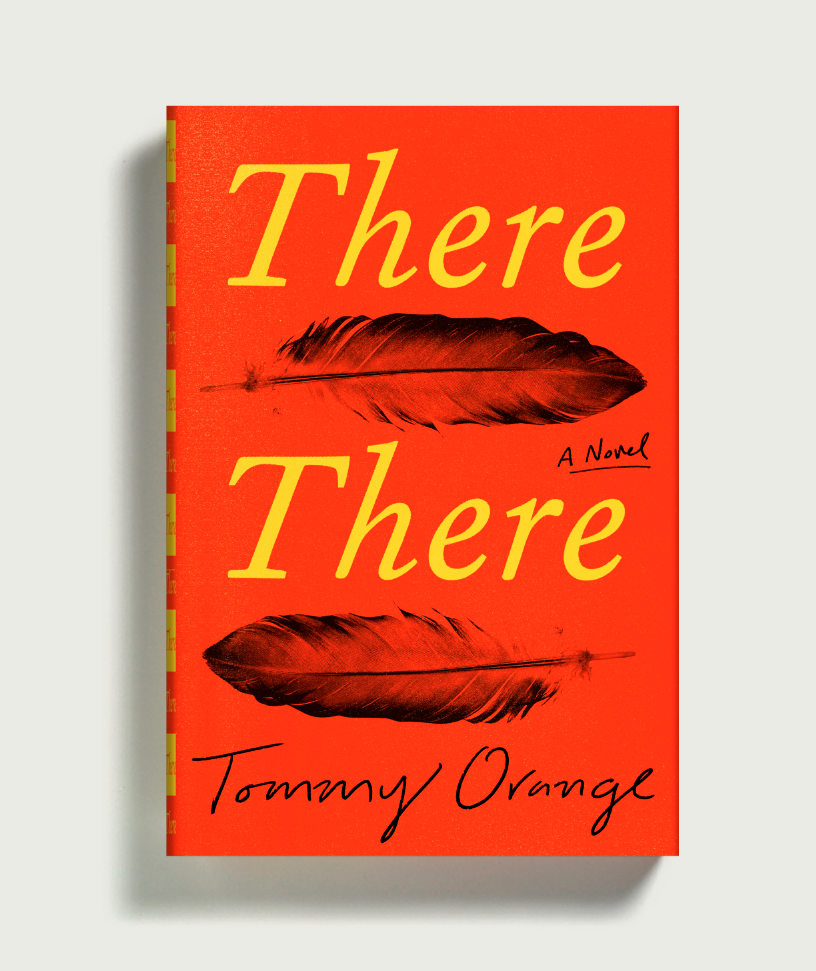
[Tommy Orange is a recent graduate from the MFA program at the Institute of American Indian Arts. He is a 2014 MacDowell fellow, and a 2016 Writing by Writers fellow. Tommy was born and raised in Oakland. He is an enrolled member of the Cheyenne and Arapaho Tribes of Oklahoma. He currently lives in Angels Camp, California. His first novel,](https://www.sweetstudy.com/questions/tina-20984081) [There There](https://www.penguinrandomhouse.com/books/563403/there-there-by-tommy-orange/9780525520375/) (Alfred A. Knopf) is out today.
– [\
Tommy Orange\
\
BuzzFeed Contributor](https://www.sweetstudy.com/author/tommyorange)
[**Comments**](https://www.sweetstudy.com/author/tommyorange) [Skip to footer](https://www.sweetstudy.com/questions/tina-20984081#news-footer)
– [a](https://www.buzzfeed.com/)
brand.
– © 2025 BuzzFeed, Inc
– [Press](https://www.buzzfeed.com/press)
– [RSS](https://www.buzzfeed.com/rss)
– [Privacy](https://www.buzzfeed.com/about/privacy)
– [Consent Preferences](https://www.buzzfeed.com/consent-preferences)
– [User Terms](https://www.buzzfeed.com/about/useragreement)
– [Accessibility Statement](https://www.buzzfeed.com/about/accessibility)
– [Ad Choices](https://www.buzzfeed.com/about/privacy#adchoices)
– [Help](https://www.buzzfeed.com/help)
– [Contact](https://www.buzzfeed.com/about/contact)
– [Sitemap](https://www.buzzfeed.com/archive)
**## HowNativeAmericanIsNativeAmericanEnough_.htm**
[Reporting To You](https://www.sweetstudy.com/) [Sign In](https://www.sweetstudy.com/signin?redirect=https%3A%2F%2Fwww.buzzfeednews.com%2Fauth%2Fsso%2Fsignin%3F)
– [Sign In](https://www.sweetstudy.com/signin?redirect=https%3A%2F%2Fwww.buzzfeednews.com%2Fauth%2Fsso%2Fsignin%3Fredirect=)
– [About Us](https://www.buzzfeednews.com/article/buzzfeednews/about-buzzfeed-news)
– [Got A Tip?](https://tips.buzzfeednews.com/)
– [buzzfeed.com](https://www.buzzfeed.com/)
1. [Culture & Criticism](https://www.sweetstudy.com/section/culture)
## How Native American Is Native American Enough?
I’m not half of two things or made up of fractions. I am made up of whole things, things that are things unto themselves.
By
[\
by Tommy Orange\
\
BuzzFeed Contributor\
\
Posted on June 5, 2018, 2:14 pm\
comment](https://www.sweetstudy.com/author/tommyorange)
[\
\
\
\
\
\
\
\
\
\
\
\
\
James Noellert for BuzzFeed News\
\
\
\
\
\
\
\
\
\
\
\
\
\
\
\
\
I’m not trying to be more Native than I am. Less white than I am. I’m trying to be honest about what I have to include. More often than not I’ve introduced myself as half Native. I know what people want to know as soon as I say that I’m Native: How much? I watch them wait to see what I’ll say about it. They don’t want to have to ask, and they know I don’t want to have to say it. They’re testing me that way, so when the quiet between us becomes too much for me, I mumble out the side of my mouth: From my dad’s side. The other half of me is apparent. My skin is light and I have freckles. I’m brown around the summer months and whiter in the winter. But I look like my dad if you saw me next to him. We have the same head and body. Same barrel chest, same nose. I reference my dad when I bring up being Native because I’m always doing it, qualifying my quantity. My amount. Where it comes from. And it’s never enough. Too many claim great-grandparents. People are tired of hearing about great-grandparents, and great-great-grandparents even more so. It’s too much math. Do I think we shouldn’t include smaller fractions in the definition of what it means to be Native? I don’t know. What I do know is that if I don’t include the amount that I am, people assume less. So if asked whether or not I’m Native, I say yeah, and then, maybe sadly, maybe with assertion, maybe both, I say: half.\
\
Those with less than half lose more than half the battle at the outset. One Native grandparent equals one-quarter blood quantum. Should someone with this amount not be allowed to identify as Native, if their grandmother raised them? If they didn’t even know that grandparent? What about great-great-grandparents? That’s an eighth — if there’s only one. What equations make sense to keep doing? How come math isn’t taught with stakes? There are Natives enrolled in tribes with less than a 30 second’s worth of Native blood in them — as in, less than 30 seconds after hearing about that kind of low-percentage ancestry, you’ll probably have dismissed them as faking. You. Everyone.\
\
There are full-blooded Native people raised by white families in white communities who don’t know a thing about what it means to be Native or how to live in such a way as to be identified as such.\
\
> How come math isn’t taught with stakes?\
\
Walking between worlds is an old Native half-breed trope. I’ve never felt that I’ve walked in two worlds. The half-world feels more like being pulled apart and told to speak in singular terms — to pick a side. Actively identifying as a Native person if you have a valid claim is important work — an act against systematically designed erasure.\
\
A half is not a number. Mathematically speaking, it doesn’t count as a number. I never did well in math, but I understand fractions better now. When I was talking to my dad recently he said, “The way I got it worked out, it’s like this, you’re 3/64 short of being half Cheyenne.”\
\
That’s about 4% less than half. According to a poll conducted by the Atlantic, 4% of Americans believe lizard people control politics. So I’m that amount of crazy Americans short of being half Native American.\
\
But I’m not half, technically. I can’t, for example, technically call myself biracial. I’d have to include 1/32 Sioux* blood and 1/64 German blood. I know this because my dad knows this. Growing up they called him Vehoe. It means white man. It also means spider, and references a mythological trickster figure. He told me I’m less than half. He didn’t mean it in any way. My dad’s an engineer. Exact math matters to him. As it does to all of us who have to figure out the kind of math involved in the equation: Enough Blood times Not Enough Blood equals eligibility or ineligibility for tribal enrollment and therefore citizenship in a sovereign nation.\
\
But I am half Native — Cheyenne — from my dad. This half of me is a cutting fraction, which cuts if I rub up against it too firmly, if I slide my finger along its edge. Halving is the beginning of erasure. I’m doing it here again. Qualifying myself. Worried about what you will think of me.\
\
> Actively identifying as a Native person if you have a valid claim is important work — an act against systematically designed erasure.\
\
I had a son in 2011. He’d be a quarter. The last in my line to be able to call himself Cheyenne, officially. He would have been. But he is an eighth Cheyenne. An eighth nothing.\
\
We are very clear with our son at home. He knows he’s Native. But what that will mean for him in 20 years, I don’t know. And what it will mean for his children?\
\
There is something you’d never know about if you weren’t Native or had a close Native relation or friend. It’s called the CDIB. Certificate of Degree of Indian Blood. This is a real, actual, official piece of paper with a record writ in fraction how much “Indian blood” I have. An official document about an amount of blood in my body. Which is a metaphor. But it isn’t. It’s real. We don’t have enough blood to keep going for our people. It stops. Ends. My son won’t have a CDIB.\
\
As it is, I am an enrolled member of the Cheyenne and Arapaho Tribes of Oklahoma. On my Certificate of Degree of Indian Blood it says I am one-quarter Cheyenne. One-fourth. The one indicates a person who did not die. Who was not killed. Whose blood has since thinned, and is more than probably on the way down that sloping line. To the stopping point.\
\
My blood is not enough because my dad's dad never accepted him as a son. So he is half nothing, resulting in my quarter nothingness. This is how I became biracial and bi-nihilist. My son cannot be enrolled in our tribe as a result of being an eighth nothing, as a result of not having the proper documents to prove he has the required amount of blood in his body. It has to be funny that after spilling all that blood, our blood, our government, which first imposed this blood law — that we keep such close track of it — make sure we don’t lose its quantity, or quality, or, what are we talking about again? If my skin is white, that’s because that’s what my mom is. And if it isn’t brown, it isn’t because of what my dad isn’t. I’m not half of two things or made up of fractions. I am made up of whole things, things that are things unto themselves. ●\
\* Most Lakota people I’ve met don’t like to be called Sioux because it’s the given white name, but when I asked my dad if we’re Lakota or Dakota or Nakota, he just said, “The way my grandma told it to me, we’re Sioux.” There was an And that’s that feel to the way he said it.\
](https://www.sweetstudy.com/questions/tina-20984081)
[Tommy Orange is a recent graduate from the MFA program at the Institute of American Indian Arts. He is a 2014 MacDowell fellow, and a 2016 Writing by Writers fellow. Tommy was born and raised in Oakland. He is an enrolled member of the Cheyenne and Arapaho Tribes of Oklahoma. He currently lives in Angels Camp, California. His first novel,](https://www.sweetstudy.com/questions/tina-20984081) [There There](https://www.penguinrandomhouse.com/books/563403/there-there-by-tommy-orange/9780525520375/) (Alfred A. Knopf) is out today.
– [\
Tommy Orange\
\
BuzzFeed Contributor](https://www.sweetstudy.com/author/tommyorange)
[**Comments**](https://www.sweetstudy.com/author/tommyorange) [Skip to footer](https://www.sweetstudy.com/questions/tina-20984081#news-footer)
– [a](https://www.buzzfeed.com/)
brand.
– © 2025 BuzzFeed, Inc
– [Press](https://www.buzzfeed.com/press)
– [RSS](https://www.buzzfeed.com/rss)
– [Privacy](https://www.buzzfeed.com/about/privacy)
– [Consent Preferences](https://www.buzzfeed.com/consent-preferences)
– [User Terms](https://www.buzzfeed.com/about/useragreement)
– [Accessibility Statement](https://www.buzzfeed.com/about/accessibility)
– [Ad Choices](https://www.buzzfeed.com/about/privacy#adchoices)
– [Help](https://www.buzzfeed.com/help)
– [Contact](https://www.buzzfeed.com/about/contact)
– [Sitemap](https://www.buzzfeed.com/archive)
**## answerthefollowingquestions.docx**
**answer the following questions:**
1. Why does Tommy Orange sometimes find it challenging when he is asked about his ethnicity? Though he identifies as Native, why does he sometimes feel pressure to identify as half Native or to share a specific percentage regarding his Native heritage? Why is that his son, though also Native, "won't have a CDIB" (Para. 11)? What does CDIB refer to, and what is its impact on Native identity, as described by Orange?
2. Tommy Orange states, "Actively identifying as a Native person if you have a valid claim is important work — an act against systematically designed erasure" (Para. 4). What does Orange mean by this? Why is it important to him to identify as Native? Explain.
3. Tommy Orange writes, "It has to be funny that after spilling all that blood, our blood, our government, which first imposed this blood law — that we keep such close track of it — make sure we don’t lose its quantity, or quality, or, what are we talking about again? If my skin is white, that’s because that’s what my mom is. And if it isn’t brown, it isn’t because of what my dad isn’t. I’m not half of two things or made up of fractions. I am made up of whole things, things that are things unto themselves" (Para. 13). What larger point is Tommy Orange making here? What insight does this section give us about how Tommy Orange views his own identity? Explain.
4. For Tommy Orange, what do you think the purpose of telling this story is? Consider that
_BuzzFeed_, the website the essay was published on, has an extensive readership. Why do you think Orange chose to tell such a personal story? Who do you think he is trying to reach with this piece? Why is the story significant, or worth telling? Explain.
.
**## HowNativeAmericanIsNativeAmericanEnough_.htm**
[Reporting To You](https://www.sweetstudy.com/) [Sign In](https://www.sweetstudy.com/signin?redirect=https%3A%2F%2Fwww.buzzfeednews.com%2Fauth%2Fsso%2Fsignin%3F)
– [Sign In](https://www.sweetstudy.com/signin?redirect=https%3A%2F%2Fwww.buzzfeednews.com%2Fauth%2Fsso%2Fsignin%3Fredirect=)
– [About Us](https://www.buzzfeednews.com/article/buzzfeednews/about-buzzfeed-news)
– [Got A Tip?](https://tips.buzzfeednews.com/)
– [buzzfeed.com](https://www.buzzfeed.com/)
1. [Culture & Criticism](https://www.sweetstudy.com/section/culture)
## How Native American Is Native American Enough?
I’m not half of two things or made up of fractions. I am made up of whole things, things that are things unto themselves.
By
[\
by Tommy Orange\
\
BuzzFeed Contributor\
\
Posted on June 5, 2018, 2:14 pm\
comment](https://www.sweetstudy.com/author/tommyorange)
[\
\
\
\
\
\
\
\
\
\
\
\
\
James Noellert for BuzzFeed News\
\
\
\
\
\
\
\
\
\
\
\
\
\
\
\
\
I’m not trying to be more Native than I am. Less white than I am. I’m trying to be honest about what I have to include. More often than not I’ve introduced myself as half Native. I know what people want to know as soon as I say that I’m Native: How much? I watch them wait to see what I’ll say about it. They don’t want to have to ask, and they know I don’t want to have to say it. They’re testing me that way, so when the quiet between us becomes too much for me, I mumble out the side of my mouth: From my dad’s side. The other half of me is apparent. My skin is light and I have freckles. I’m brown around the summer months and whiter in the winter. But I look like my dad if you saw me next to him. We have the same head and body. Same barrel chest, same nose. I reference my dad when I bring up being Native because I’m always doing it, qualifying my quantity. My amount. Where it comes from. And it’s never enough. Too many claim great-grandparents. People are tired of hearing about great-grandparents, and great-great-grandparents even more so. It’s too much math. Do I think we shouldn’t include smaller fractions in the definition of what it means to be Native? I don’t know. What I do know is that if I don’t include the amount that I am, people assume less. So if asked whether or not I’m Native, I say yeah, and then, maybe sadly, maybe with assertion, maybe both, I say: half.\
\
Those with less than half lose more than half the battle at the outset. One Native grandparent equals one-quarter blood quantum. Should someone with this amount not be allowed to identify as Native, if their grandmother raised them? If they didn’t even know that grandparent? What about great-great-grandparents? That’s an eighth — if there’s only one. What equations make sense to keep doing? How come math isn’t taught with stakes? There are Natives enrolled in tribes with less than a 30 second’s worth of Native blood in them — as in, less than 30 seconds after hearing about that kind of low-percentage ancestry, you’ll probably have dismissed them as faking. You. Everyone.\
\
There are full-blooded Native people raised by white families in white communities who don’t know a thing about what it means to be Native or how to live in such a way as to be identified as such.\
\
> How come math isn’t taught with stakes?\
\
Walking between worlds is an old Native half-breed trope. I’ve never felt that I’ve walked in two worlds. The half-world feels more like being pulled apart and told to speak in singular terms — to pick a side. Actively identifying as a Native person if you have a valid claim is important work — an act against systematically designed erasure.\
\
A half is not a number. Mathematically speaking, it doesn’t count as a number. I never did well in math, but I understand fractions better now. When I was talking to my dad recently he said, “The way I got it worked out, it’s like this, you’re 3/64 short of being half Cheyenne.”\
\
That’s about 4% less than half. According to a poll conducted by the Atlantic, 4% of Americans believe lizard people control politics. So I’m that amount of crazy Americans short of being half Native American.\
\
But I’m not half, technically. I can’t, for example, technically call myself biracial. I’d have to include 1/32 Sioux* blood and 1/64 German blood. I know this because my dad knows this. Growing up they called him Vehoe. It means white man. It also means spider, and references a mythological trickster figure. He told me I’m less than half. He didn’t mean it in any way. My dad’s an engineer. Exact math matters to him. As it does to all of us who have to figure out the kind of math involved in the equation: Enough Blood times Not Enough Blood equals eligibility or ineligibility for tribal enrollment and therefore citizenship in a sovereign nation.\
\
But I am half Native — Cheyenne — from my dad. This half of me is a cutting fraction, which cuts if I rub up against it too firmly, if I slide my finger along its edge. Halving is the beginning of erasure. I’m doing it here again. Qualifying myself. Worried about what you will think of me.\
\
> Actively identifying as a Native person if you have a valid claim is important work — an act against systematically designed erasure.\
\
I had a son in 2011. He’d be a quarter. The last in my line to be able to call himself Cheyenne, officially. He would have been. But he is an eighth Cheyenne. An eighth nothing.\
\
We are very clear with our son at home. He knows he’s Native. But what that will mean for him in 20 years, I don’t know. And what it will mean for his children?\
\
There is something you’d never know about if you weren’t Native or had a close Native relation or friend. It’s called the CDIB. Certificate of Degree of Indian Blood. This is a real, actual, official piece of paper with a record writ in fraction how much “Indian blood” I have. An official document about an amount of blood in my body. Which is a metaphor. But it isn’t. It’s real. We don’t have enough blood to keep going for our people. It stops. Ends. My son won’t have a CDIB.\
\
As it is, I am an enrolled member of the Cheyenne and Arapaho Tribes of Oklahoma. On my Certificate of Degree of Indian Blood it says I am one-quarter Cheyenne. One-fourth. The one indicates a person who did not die. Who was not killed. Whose blood has since thinned, and is more than probably on the way down that sloping line. To the stopping point.\
\
My blood is not enough because my dad's dad never accepted him as a son. So he is half nothing, resulting in my quarter nothingness. This is how I became biracial and bi-nihilist. My son cannot be enrolled in our tribe as a result of being an eighth nothing, as a result of not having the proper documents to prove he has the required amount of blood in his body. It has to be funny that after spilling all that blood, our blood, our government, which first imposed this blood law — that we keep such close track of it — make sure we don’t lose its quantity, or quality, or, what are we talking about again? If my skin is white, that’s because that’s what my mom is. And if it isn’t brown, it isn’t because of what my dad isn’t. I’m not half of two things or made up of fractions. I am made up of whole things, things that are things unto themselves. ●\
\* Most Lakota people I’ve met don’t like to be called Sioux because it’s the given white name, but when I asked my dad if we’re Lakota or Dakota or Nakota, he just said, “The way my grandma told it to me, we’re Sioux.” There was an And that’s that feel to the way he said it.\
](https://www.sweetstudy.com/questions/tina-20984081)
[Tommy Orange is a recent graduate from the MFA program at the Institute of American Indian Arts. He is a 2014 MacDowell fellow, and a 2016 Writing by Writers fellow. Tommy was born and raised in Oakland. He is an enrolled member of the Cheyenne and Arapaho Tribes of Oklahoma. He currently lives in Angels Camp, California. His first novel,](https://www.sweetstudy.com/questions/tina-20984081) [There There](https://www.penguinrandomhouse.com/books/563403/there-there-by-tommy-orange/9780525520375/) (Alfred A. Knopf) is out today.
– [\
Tommy Orange\
\
BuzzFeed Contributor](https://www.sweetstudy.com/author/tommyorange)
[**Comments**](https://www.sweetstudy.com/author/tommyorange) [Skip to footer](https://www.sweetstudy.com/questions/tina-20984081#news-footer)
– [a](https://www.buzzfeed.com/)
brand.
– © 2025 BuzzFeed, Inc
– [Press](https://www.buzzfeed.com/press)
– [RSS](https://www.buzzfeed.com/rss)
– [Privacy](https://www.buzzfeed.com/about/privacy)
– [Consent Preferences](https://www.buzzfeed.com/consent-preferences)
– [User Terms](https://www.buzzfeed.com/about/useragreement)
– [Accessibility Statement](https://www.buzzfeed.com/about/accessibility)
– [Ad Choices](https://www.buzzfeed.com/about/privacy#adchoices)
– [Help](https://www.buzzfeed.com/help)
– [Contact](https://www.buzzfeed.com/about/contact)
– [Sitemap](https://www.buzzfeed.com/archive)
**## answerthefollowingquestions.docx**
**answer the following questions:**
1. Why does Tommy Orange sometimes find it challenging when he is asked about his ethnicity? Though he identifies as Native, why does he sometimes feel pressure to identify as half Native or to share a specific percentage regarding his Native heritage? Why is that his son, though also Native, "won't have a CDIB" (Para. 11)? What does CDIB refer to, and what is its impact on Native identity, as described by Orange?
2. Tommy Orange states, "Actively identifying as a Native person if you have a valid claim is important work — an act against systematically designed erasure" (Para. 4). What does Orange mean by this? Why is it important to him to identify as Native? Explain.
3. Tommy Orange writes, "It has to be funny that after spilling all that blood, our blood, our government, which first imposed this blood law — that we keep such close track of it — make sure we don’t lose its quantity, or quality, or, what are we talking about again? If my skin is white, that’s because that’s what my mom is. And if it isn’t brown, it isn’t because of what my dad isn’t. I’m not half of two things or made up of fractions. I am made up of whole things, things that are things unto themselves" (Para. 13). What larger point is Tommy Orange making here? What insight does this section give us about how Tommy Orange views his own identity? Explain.
4. For Tommy Orange, what do you think the purpose of telling this story is? Consider that
_BuzzFeed_, the website the essay was published on, has an extensive readership. Why do you think Orange chose to tell such a personal story? Who do you think he is trying to reach with this piece? Why is the story significant, or worth telling? Explain.
.
**## HowNativeAmericanIsNativeAmericanEnough_.htm**
[Reporting To You](https://www.sweetstudy.com/) [Sign In](https://www.sweetstudy.com/signin?redirect=https%3A%2F%2Fwww.buzzfeednews.com%2Fauth%2Fsso%2Fsignin%3F)
– [Sign In](https://www.sweetstudy.com/signin?redirect=https%3A%2F%2Fwww.buzzfeednews.com%2Fauth%2Fsso%2Fsignin%3Fredirect=)
– [About Us](https://www.buzzfeednews.com/article/buzzfeednews/about-buzzfeed-news)
– [Got A Tip?](https://tips.buzzfeednews.com/)
– [buzzfeed.com](https://www.buzzfeed.com/)
1. [Culture & Criticism](https://www.sweetstudy.com/section/culture)
## How Native American Is Native American Enough?
I’m not half of two things or made up of fractions. I am made up of whole things, things that are things unto themselves.
By
[\
by Tommy Orange\
\
BuzzFeed Contributor\
\
Posted on June 5, 2018, 2:14 pm\
comment](https://www.sweetstudy.com/author/tommyorange)
[\
\
\
\
\
\
\
\
\
\
\
\
\
James Noellert for BuzzFeed News\
\
\
\
\
\
\
\
\
\
\
\
\
\
\
\
\
I’m not trying to be more Native than I am. Less white than I am. I’m trying to be honest about what I have to include. More often than not I’ve introduced myself as half Native. I know what people want to know as soon as I say that I’m Native: How much? I watch them wait to see what I’ll say about it. They don’t want to have to ask, and they know I don’t want to have to say it. They’re testing me that way, so when the quiet between us becomes too much for me, I mumble out the side of my mouth: From my dad’s side. The other half of me is apparent. My skin is light and I have freckles. I’m brown around the summer months and whiter in the winter. But I look like my dad if you saw me next to him. We have the same head and body. Same barrel chest, same nose. I reference my dad when I bring up being Native because I’m always doing it, qualifying my quantity. My amount. Where it comes from. And it’s never enough. Too many claim great-grandparents. People are tired of hearing about great-grandparents, and great-great-grandparents even more so. It’s too much math. Do I think we shouldn’t include smaller fractions in the definition of what it means to be Native? I don’t know. What I do know is that if I don’t include the amount that I am, people assume less. So if asked whether or not I’m Native, I say yeah, and then, maybe sadly, maybe with assertion, maybe both, I say: half.\
\
Those with less than half lose more than half the battle at the outset. One Native grandparent equals one-quarter blood quantum. Should someone with this amount not be allowed to identify as Native, if their grandmother raised them? If they didn’t even know that grandparent? What about great-great-grandparents? That’s an eighth — if there’s only one. What equations make sense to keep doing? How come math isn’t taught with stakes? There are Natives enrolled in tribes with less than a 30 second’s worth of Native blood in them — as in, less than 30 seconds after hearing about that kind of low-percentage ancestry, you’ll probably have dismissed them as faking. You. Everyone.\
\
There are full-blooded Native people raised by white families in white communities who don’t know a thing about what it means to be Native or how to live in such a way as to be identified as such.\
\
> How come math isn’t taught with stakes?\
\
Walking between worlds is an old Native half-breed trope. I’ve never felt that I’ve walked in two worlds. The half-world feels more like being pulled apart and told to speak in singular terms — to pick a side. Actively identifying as a Native person if you have a valid claim is important work — an act against systematically designed erasure.\
\
A half is not a number. Mathematically speaking, it doesn’t count as a number. I never did well in math, but I understand fractions better now. When I was talking to my dad recently he said, “The way I got it worked out, it’s like this, you’re 3/64 short of being half Cheyenne.”\
\
That’s about 4% less than half. According to a poll conducted by the Atlantic, 4% of Americans believe lizard people control politics. So I’m that amount of crazy Americans short of being half Native American.\
\
But I’m not half, technically. I can’t, for example, technically call myself biracial. I’d have to include 1/32 Sioux* blood and 1/64 German blood. I know this because my dad knows this. Growing up they called him Vehoe. It means white man. It also means spider, and references a mythological trickster figure. He told me I’m less than half. He didn’t mean it in any way. My dad’s an engineer. Exact math matters to him. As it does to all of us who have to figure out the kind of math involved in the equation: Enough Blood times Not Enough Blood equals eligibility or ineligibility for tribal enrollment and therefore citizenship in a sovereign nation.\
\
But I am half Native — Cheyenne — from my dad. This half of me is a cutting fraction, which cuts if I rub up against it too firmly, if I slide my finger along its edge. Halving is the beginning of erasure. I’m doing it here again. Qualifying myself. Worried about what you will think of me.\
\
> Actively identifying as a Native person if you have a valid claim is important work — an act against systematically designed erasure.\
\
I had a son in 2011. He’d be a quarter. The last in my line to be able to call himself Cheyenne, officially. He would have been. But he is an eighth Cheyenne. An eighth nothing.\
\
We are very clear with our son at home. He knows he’s Native. But what that will mean for him in 20 years, I don’t know. And what it will mean for his children?\
\
There is something you’d never know about if you weren’t Native or had a close Native relation or friend. It’s called the CDIB. Certificate of Degree of Indian Blood. This is a real, actual, official piece of paper with a record writ in fraction how much “Indian blood” I have. An official document about an amount of blood in my body. Which is a metaphor. But it isn’t. It’s real. We don’t have enough blood to keep going for our people. It stops. Ends. My son won’t have a CDIB.\
\
As it is, I am an enrolled member of the Cheyenne and Arapaho Tribes of Oklahoma. On my Certificate of Degree of Indian Blood it says I am one-quarter Cheyenne. One-fourth. The one indicates a person who did not die. Who was not killed. Whose blood has since thinned, and is more than probably on the way down that sloping line. To the stopping point.\
\
My blood is not enough because my dad's dad never accepted him as a son. So he is half nothing, resulting in my quarter nothingness. This is how I became biracial and bi-nihilist. My son cannot be enrolled in our tribe as a result of being an eighth nothing, as a result of not having the proper documents to prove he has the required amount of blood in his body. It has to be funny that after spilling all that blood, our blood, our government, which first imposed this blood law — that we keep such close track of it — make sure we don’t lose its quantity, or quality, or, what are we talking about again? If my skin is white, that’s because that’s what my mom is. And if it isn’t brown, it isn’t because of what my dad isn’t. I’m not half of two things or made up of fractions. I am made up of whole things, things that are things unto themselves. ●\
\* Most Lakota people I’ve met don’t like to be called Sioux because it’s the given white name, but when I asked my dad if we’re Lakota or Dakota or Nakota, he just said, “The way my grandma told it to me, we’re Sioux.” There was an And that’s that feel to the way he said it.\
](https://www.sweetstudy.com/questions/tina-20984081)
[Tommy Orange is a recent graduate from the MFA program at the Institute of American Indian Arts. He is a 2014 MacDowell fellow, and a 2016 Writing by Writers fellow. Tommy was born and raised in Oakland. He is an enrolled member of the Cheyenne and Arapaho Tribes of Oklahoma. He currently lives in Angels Camp, California. His first novel,](https://www.sweetstudy.com/questions/tina-20984081) [There There](https://www.penguinrandomhouse.com/books/563403/there-there-by-tommy-orange/9780525520375/) (Alfred A. Knopf) is out today.
– [\
Tommy Orange\
\
BuzzFeed Contributor](https://www.sweetstudy.com/author/tommyorange)
[**Comments**](https://www.sweetstudy.com/author/tommyorange) [Skip to footer](https://www.sweetstudy.com/questions/tina-20984081#news-footer)
– [a](https://www.buzzfeed.com/)
brand.
– © 2025 BuzzFeed, Inc
– [Press](https://www.buzzfeed.com/press)
– [RSS](https://www.buzzfeed.com/rss)
– [Privacy](https://www.buzzfeed.com/about/privacy)
– [Consent Preferences](https://www.buzzfeed.com/consent-preferences)
– [User Terms](https://www.buzzfeed.com/about/useragreement)
– [Accessibility Statement](https://www.buzzfeed.com/about/accessibility)
– [Ad Choices](https://www.buzzfeed.com/about/privacy#adchoices)
– [Help](https://www.buzzfeed.com/help)
– [Contact](https://www.buzzfeed.com/about/contact)
– [Sitemap](https://www.buzzfeed.com/archive)