Category: Curriculum & Instructional Design

  • [Solved] n jordan primary source

    ✓ Verified Academic Solution Available

    Executive Solution Overview

    Please see attachment – a month ago **files (1)** – ## EssayPrompt1-Final4.docx **## EssayPrompt1-Final4.docx** African American History Since 1877 Primary Source Essay Instructions Assignment Overview: This document essay is an opportunity for you to critically engage with course materials, express…

    Instant Solution Download

    $6.99

    Immediate access to the full model answer, formatted citations, and rubric breakdown.

    Need a Fresh Custom Paper?

    Have this question answered from scratch according to your specific instructions and deadline.

    Order on TutorsGallery →

    Assignment Prompt & Instructions

    Please see attachment

    – a month ago

    **files (1)**

    – ## EssayPrompt1-Final4.docx

    **## EssayPrompt1-Final4.docx**

    African American History Since 1877

    Primary Source Essay Instructions

    Assignment Overview: This document essay is an opportunity for you to critically engage with course materials, express your understanding, and analyze themes, events, and experiences discussed in African American History. You will use sources from the assigned list to write your essay.
    **Sources outside of this list are not allowed.**

    Important Dates to Remember:

    · Essay Planning Worksheet due Sunday, September 13th at 11:59 pm

    · Primary Source Essay #1 due Sunday, September 27th at 11:59 pm

    Assigned Sources:

    1. 14th Amendment

    2. 15th Amendment

    3. Black Code of Mississippi

    4. Ida B. Wells – Barnett, “Lynch Law in America”

    5. NAACP,
    _Thirty Years of Lynching in the United States_

    6. Walter F. White, “The Eruption of Tulsa”

    7. W.E.B DuBois, “Returning Soldiers”

    **Prompt:**

    Between Reconstruction and the end of World War I, African Americans confronted a widening gap between the constitutional promise of citizenship and its lived reality. These documents represent different moments, genres, and strategies within that struggle.

    **Write a 2 – 3 page compare / contrast essay examining how two or more of the assigned primary sources reveal the gap between the rights promised to African Americans and the realities they experienced after 1877.**

    You may choose which sources you want to compare, but you must use only the seven sources listed below. Your essay should not simply summarize each source separately. Instead, use the sources together to develop a historical argument about African American freedom, citizenship, equality, resistance, or racial oppression after Reconstruction.

    Questions to Consider:

    · What does each source reveal about African American rights, freedom, or citizenship?

    · What similarities do you see between the sources?

    · What differences do you see in the authors, perspectives, time periods, or historical circumstances?

    · How do the sources demonstrate the difference between legal rights and lived experiences?

    · What forms of racial control, discrimination, or violence appear in the sources?

    · How do African Americans respond to or challenge these conditions?

    · Does the latter source suggest that conditions for African Americans had changed? Why or why not?

    · What can we learn by placing these sources in conversation with one another?

    Your essay should ultimately answer a question such as:

    **What do these sources reveal about the struggle for African American freedom and equality after Reconstruction?**

    You are not required to answer this exact question; your thesis should reflect the specific sources and comparison you choose.

    **Essay Requirements:**

    · Be
    **2–3 full pages**

    · Have a clear
    **thesis statement**

    · Compare and/or contrast
    **at least two of the assigned sources**

    · Use
    **only the seven assigned sources**

    · Include specific evidence from the sources

    · Explain the significance of the evidence rather than simply summarizing it

    · Identify similarities and/or differences between the sources

    · Connect the sources to the broader history of African Americans after Reconstruction

    · Use proper grammar, organization, and paragraph structure

  • [Solved] My Inclusive Educator Framework & Reflection

    ✓ Verified Academic Solution Available

    Executive Solution Overview

    I need a mindmap created very similar to the AI Generated Mindmap but created by a human being done in Canva. I will need the link to the Canva. – [\ \ AIGeneratedMindMapinspirationforscreenshot5.png](https://www.sweetstudy.com/files/aigeneratedmindmapinspirationforscreenshot5-png "AIGeneratedMind…

    Instant Solution Download

    $6.99

    Immediate access to the full model answer, formatted citations, and rubric breakdown.

    Need a Fresh Custom Paper?

    Have this question answered from scratch according to your specific instructions and deadline.

    Order on TutorsGallery →

    Assignment Prompt & Instructions

    I need a mindmap created very similar to the AI Generated Mindmap but created by a human being done in Canva. I will need the link to the Canva.

    – [\
    \
    AIGeneratedMindMapinspirationforscreenshot5.png](https://www.sweetstudy.com/files/aigeneratedmindmapinspirationforscreenshot5-png "AIGeneratedMindMapinspirationforscreenshot5.png")

    – a month ago

  • [Solved] lilly artifact 1

    ✓ Verified Academic Solution Available

    Executive Solution Overview

    Please see attachment – a month ago **files (3)** – ## Lillyartifact1.docx – ## NorthCarolinaPrincipalPortfolioAssessmentNCPPA.htm – NCPPATask2.pdf **## Lillyartifact1.docx** For this assignment, you will submit **Artifact 1 from Task 2 of the North Carolina Principal Portfolio**. Artifact 1 is deve…

    Instant Solution Download

    $6.99

    Immediate access to the full model answer, formatted citations, and rubric breakdown.

    Need a Fresh Custom Paper?

    Have this question answered from scratch according to your specific instructions and deadline.

    Order on TutorsGallery →

    Assignment Prompt & Instructions

    Please see attachment

    – a month ago

    **files (3)**

    – ## Lillyartifact1.docx

    – ## NorthCarolinaPrincipalPortfolioAssessmentNCPPA.htm

    – NCPPATask2.pdf

    **## Lillyartifact1.docx**

    For this assignment, you will submit
    **Artifact 1 from Task 2 of the North Carolina Principal Portfolio**. Artifact 1 is developed through the successful completion of
    **Component 1: Investigate** and
    **Component 2** of Task 2. This submission documents your data analysis, identification of a priority academic area, and preparation work that informs your improvement plan.

    Please note:
    **Submission of Artifact 1 in this course results in full assignment credit** and confirms completion of course requirements.
    **This submission does not indicate proficiency or scoring status** for the official NC Principal Portfolio, which will be evaluated separately by the state.

    1. Carefully read all sections of Task 2 to understand how the components connect and how Artifact 1 fits into the overall task.

    2.
    **Review Component 1: Investigate**
    Ensure you have completed all required elements. Consider:

    · Identify a priority academic area supported by student achievement data.

    · Describe the school context, including school and district goals, professional learning structures, and existing teacher collaboration practices.

    · Identify the target student group and explain why this area is a school priority.

    · Select or identify the professional learning group that will participate in the task.

    · Provide a rationale for the group's membership.

    3.
    **Review Component 2: Prepare**
    Confirm that you have completed the required preparation work. Consider:

    · Facilitate collaborative discussions to identify an instructional focus within the priority academic area.

    · Establish group norms and a collaborative learning plan.

    · Guide teachers in reviewing student data and instructional research.

    · Develop a plan for professional learning and implementation of a research-based instructional strategy.

    · Document evidence of teacher collaboration and collective decision-making.

    All work should follow the
    **official NC Principal Portfolio Task 2 guidance**, prompts, and expectations.

    **## NorthCarolinaPrincipalPortfolioAssessmentNCPPA.htm**

    [Skip to Content](https://www.sweetstudy.com/questions/lilly-artifact-1#) [Skip to Menu](https://www.sweetstudy.com/questions/lilly-artifact-1#)![North Carolina Licensure Assessments](https://www.nc.nesinc.com/config/images/logo.png)

    – [![](https://www.nc.nesinc.com/config/images/icon_cart.gif)View Cart](https://www.nc.nesinc.com/App/Cart/ViewCart.aspx)
    – [My Account](https://www.nc.nesinc.com/App/Customer/MyAccountHome.aspx)
    – [Contact Us](https://www.nc.nesinc.com/Contacts.aspx)

    Toggle navigation

    – [Home](https://www.nc.nesinc.com/Home.aspx)
    – [Tests](https://www.nc.nesinc.com/PageView.aspx?f=GEN_Tests.html)
    – [Prepare](https://www.nc.nesinc.com/PageView.aspx?f=GEN_Prepare.html)
    – [Register](https://www.nc.nesinc.com/RegChooser.aspx)
    – [Scores](https://www.nc.nesinc.com/PageView.aspx?f=GEN_GetResults.html)
    – [Policies](https://www.nc.nesinc.com/PageView.aspx?f=GEN_Policies.html)
    – [Faculty Resources](https://www.nc.nesinc.com/PageView.aspx?f=GEN_FacultyResources.html)

    – [Home](https://www.nc.nesinc.com/Home.aspx)
    – [Tests](https://www.nc.nesinc.com/PageView.aspx?f=GEN_Tests.html)
    – NCPPA

    ## North Carolina Principal Portfolio Assessment (NCPPA)

    School leaders have the ability to create a school with meaningful achievement goals and expectations, respectful and trusting relationships among the adults and the students, and effective programs and practices—a place where all students can learn and feel safe and supported. Leaders base their work on their leadership knowledge; skills and dispositions; evidence and research; and the commitment of staff, families, and the community. To help ensure that school leaders are effective, all candidates seeking principal/assistant principal licensure in North Carolina now must meet state performance assessment requirements.

    Toward that end, the North Carolina Department of Public Instruction has supported the development and implementation of the North Carolina Principal Portfolio Assessment (NCPPA). The NCPPA assessment system is designed to produce clear evidence of a candidate's readiness for an initial school leadership position. It is aligned with other North Carolina leadership development efforts to prepare, support, and evaluate principals and assistant principals.

    The NCPPA is aligned with the North Carolina Standards for School Executives, the national performance assessment requirements of the Educational Leadership Coordinating Council (ELCC) in its national accreditation program and policy standards, and the Interstate School Leadership Licensure Consortium (ISLLC) 2008.

    With the passage of Session Law 2024-57, any candidate who has not completed at least one course towards a degree or licensure-only program by August 31, 2025, will be required to complete the NCPPA for obtaining a principal license. Candidates are required to register for and pay a fee to complete each NCPPA task.

    Format

    Performance assessment consisting of three leadership tasks:

    – Task 1: Leadership through a Vision for High Student Achievement

    – Task 2: Instructional Leadership for a Professional Learning Culture

    – Task 3: Leadership in Observing, Assessing, and Supporting Individual Teacher Effectiveness

    Each task is divided into four components of leadership action that reflect the cycle of leadership inquiry and learning, as shown below.
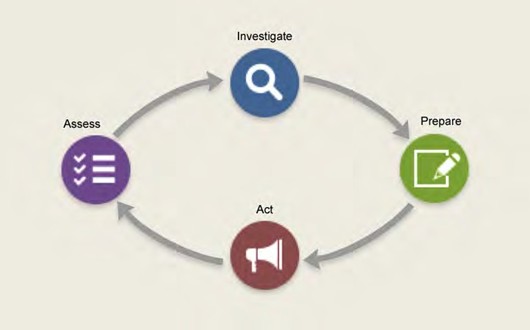
    ![Circular graphic representing 4 components of leadership action. Between each component is an arrow pointing clockwise to the next component. The order of components, starting at the top is: Investigate, Prepare, Act, Assess](https://www.nc.nesinc.com/config/images/componentsImage.jpg)

    Assessment Materials

    [Access the handbook, templates, evidence charts, and more](https://www.nc.nesinc.com/TestView.aspx?f=HTML_FRAG/NCPPA_AssessmentMaterials.html).

    Preparation

    [View the preparation materials available for this assessment](https://www.nc.nesinc.com/TestView.aspx?f=HTML_FRAG/NCPPA_PrepMaterials.html).

    Submission and Reporting Dates

    [View the submission deadlines associated with each reporting date](https://www.nc.nesinc.com/Content/HTML_FRAG/NCPPARB_ScoreReportDates.html).

    Fees

    Task 1: $125

    Task 2: $150

    Task 3: $150

    [Review complete fee and payment policy information](https://www.nc.nesinc.com/TestView.aspx?f=NCPAT_TestFeesAndPaymentInformation.html).

    Passing Score

    The North Carolina Principal Portfolio Assessment is not a nationally normed assessment. It is standard operating procedure for Pearson to provide guidance to states in establishing cut scores, but it is ultimately up to each state to determine a) what the cut score is and b) when and how it takes effect. We defer to the North Carolina Department of Public Instruction to communicate that information to candidates.

    Results

    [Scores are available at 10 p.m. eastern time on the results reporting dates](https://www.nc.nesinc.com/Content/HTML_FRAG/NCPPARB_ScoreReportDates.html).

    Policies and Rules

    When you register, you must agree to abide by all testing rules and policies.

    [Read them now](https://www.nc.nesinc.com/TestView.aspx?f=NCPAT_Policies.html).

    ##### Need More Time?

    Your Session is about to expire in  seconds.

    To continue your session, select Stay Signed In.

    Stay Signed In
    Sign Out

    ![](https://www.nc.nesinc.com/Config/Images/top.gif)[Top of Page](https://www.sweetstudy.com/questions/lilly-artifact-1#top)

    Copyright © Pearson Education, Inc. or its affiliate(s). All rights reserved.

    Pearson, 300 Venture Way, Hadley, MA 01035

    Information Sidebar

    – [Tests](https://www.nc.nesinc.com/PageView.aspx?f=GEN_Tests.html)
    – NCPPA
    – [Assessment Materials](https://www.nc.nesinc.com/TestView.aspx?f=HTML_FRAG/NCPPA_AssessmentMaterials.html)
    – [Preparation Materials](https://www.nc.nesinc.com/TestView.aspx?f=HTML_FRAG/NCPPA_PrepMaterials.html)
    – [Assessment Fees and Payment Information](https://www.nc.nesinc.com/TestView.aspx?f=NCPAT_TestFeesAndPaymentInformation.html)
    – [Requesting Alternative Arrangements](https://www.nc.nesinc.com/TestView.aspx?f=NCPAT_AA-RequestingAlternativeTestingArrangements.html)
    – [Policies](https://www.nc.nesinc.com/TestView.aspx?f=NCPAT_Policies.html)
    – [Faculty Policies and Resources](https://www.nc.nesinc.com/TestView.aspx?f=NTPAT_FacultyPoliciesandResources.html)

    **NCPPATask2.pdf**

    This file is too large to display. [View in new window](https://www.sweetstudy.com/files/ncppatask2-pdf)

    **NCPPATask2.pdf**

    This file is too large to display. [View in new window](https://www.sweetstudy.com/files/ncppatask2-pdf)

    **## Lillyartifact1.docx**

    For this assignment, you will submit
    **Artifact 1 from Task 2 of the North Carolina Principal Portfolio**. Artifact 1 is developed through the successful completion of
    **Component 1: Investigate** and
    **Component 2** of Task 2. This submission documents your data analysis, identification of a priority academic area, and preparation work that informs your improvement plan.

    Please note:
    **Submission of Artifact 1 in this course results in full assignment credit** and confirms completion of course requirements.
    **This submission does not indicate proficiency or scoring status** for the official NC Principal Portfolio, which will be evaluated separately by the state.

    1. Carefully read all sections of Task 2 to understand how the components connect and how Artifact 1 fits into the overall task.

    2.
    **Review Component 1: Investigate**
    Ensure you have completed all required elements. Consider:

    · Identify a priority academic area supported by student achievement data.

    · Describe the school context, including school and district goals, professional learning structures, and existing teacher collaboration practices.

    · Identify the target student group and explain why this area is a school priority.

    · Select or identify the professional learning group that will participate in the task.

    · Provide a rationale for the group's membership.

    3.
    **Review Component 2: Prepare**
    Confirm that you have completed the required preparation work. Consider:

    · Facilitate collaborative discussions to identify an instructional focus within the priority academic area.

    · Establish group norms and a collaborative learning plan.

    · Guide teachers in reviewing student data and instructional research.

    · Develop a plan for professional learning and implementation of a research-based instructional strategy.

    · Document evidence of teacher collaboration and collective decision-making.

    All work should follow the
    **official NC Principal Portfolio Task 2 guidance**, prompts, and expectations.

    **## NorthCarolinaPrincipalPortfolioAssessmentNCPPA.htm**

    [Skip to Content](https://www.sweetstudy.com/questions/lilly-artifact-1#) [Skip to Menu](https://www.sweetstudy.com/questions/lilly-artifact-1#)![North Carolina Licensure Assessments](https://www.nc.nesinc.com/config/images/logo.png)

    – [![](https://www.nc.nesinc.com/config/images/icon_cart.gif)View Cart](https://www.nc.nesinc.com/App/Cart/ViewCart.aspx)
    – [My Account](https://www.nc.nesinc.com/App/Customer/MyAccountHome.aspx)
    – [Contact Us](https://www.nc.nesinc.com/Contacts.aspx)

    Toggle navigation

    – [Home](https://www.nc.nesinc.com/Home.aspx)
    – [Tests](https://www.nc.nesinc.com/PageView.aspx?f=GEN_Tests.html)
    – [Prepare](https://www.nc.nesinc.com/PageView.aspx?f=GEN_Prepare.html)
    – [Register](https://www.nc.nesinc.com/RegChooser.aspx)
    – [Scores](https://www.nc.nesinc.com/PageView.aspx?f=GEN_GetResults.html)
    – [Policies](https://www.nc.nesinc.com/PageView.aspx?f=GEN_Policies.html)
    – [Faculty Resources](https://www.nc.nesinc.com/PageView.aspx?f=GEN_FacultyResources.html)

    – [Home](https://www.nc.nesinc.com/Home.aspx)
    – [Tests](https://www.nc.nesinc.com/PageView.aspx?f=GEN_Tests.html)
    – NCPPA

    ## North Carolina Principal Portfolio Assessment (NCPPA)

    School leaders have the ability to create a school with meaningful achievement goals and expectations, respectful and trusting relationships among the adults and the students, and effective programs and practices—a place where all students can learn and feel safe and supported. Leaders base their work on their leadership knowledge; skills and dispositions; evidence and research; and the commitment of staff, families, and the community. To help ensure that school leaders are effective, all candidates seeking principal/assistant principal licensure in North Carolina now must meet state performance assessment requirements.

    Toward that end, the North Carolina Department of Public Instruction has supported the development and implementation of the North Carolina Principal Portfolio Assessment (NCPPA). The NCPPA assessment system is designed to produce clear evidence of a candidate's readiness for an initial school leadership position. It is aligned with other North Carolina leadership development efforts to prepare, support, and evaluate principals and assistant principals.

    The NCPPA is aligned with the North Carolina Standards for School Executives, the national performance assessment requirements of the Educational Leadership Coordinating Council (ELCC) in its national accreditation program and policy standards, and the Interstate School Leadership Licensure Consortium (ISLLC) 2008.

    With the passage of Session Law 2024-57, any candidate who has not completed at least one course towards a degree or licensure-only program by August 31, 2025, will be required to complete the NCPPA for obtaining a principal license. Candidates are required to register for and pay a fee to complete each NCPPA task.

    Format

    Performance assessment consisting of three leadership tasks:

    – Task 1: Leadership through a Vision for High Student Achievement

    – Task 2: Instructional Leadership for a Professional Learning Culture

    – Task 3: Leadership in Observing, Assessing, and Supporting Individual Teacher Effectiveness

    Each task is divided into four components of leadership action that reflect the cycle of leadership inquiry and learning, as shown below.

    ![Circular graphic representing 4 components of leadership action. Between each component is an arrow pointing clockwise to the next component. The order of components, starting at the top is: Investigate, Prepare, Act, Assess](https://www.nc.nesinc.com/config/images/componentsImage.jpg)

    Assessment Materials

    [Access the handbook, templates, evidence charts, and more](https://www.nc.nesinc.com/TestView.aspx?f=HTML_FRAG/NCPPA_AssessmentMaterials.html).

    Preparation

    [View the preparation materials available for this assessment](https://www.nc.nesinc.com/TestView.aspx?f=HTML_FRAG/NCPPA_PrepMaterials.html).

    Submission and Reporting Dates

    [View the submission deadlines associated with each reporting date](https://www.nc.nesinc.com/Content/HTML_FRAG/NCPPARB_ScoreReportDates.html).

    Fees

    Task 1: $125

    Task 2: $150

    Task 3: $150

    [Review complete fee and payment policy information](https://www.nc.nesinc.com/TestView.aspx?f=NCPAT_TestFeesAndPaymentInformation.html).

    Passing Score

    The North Carolina Principal Portfolio Assessment is not a nationally normed assessment. It is standard operating procedure for Pearson to provide guidance to states in establishing cut scores, but it is ultimately up to each state to determine a) what the cut score is and b) when and how it takes effect. We defer to the North Carolina Department of Public Instruction to communicate that information to candidates.

    Results

    [Scores are available at 10 p.m. eastern time on the results reporting dates](https://www.nc.nesinc.com/Content/HTML_FRAG/NCPPARB_ScoreReportDates.html).

    Policies and Rules

    When you register, you must agree to abide by all testing rules and policies.

    [Read them now](https://www.nc.nesinc.com/TestView.aspx?f=NCPAT_Policies.html).

    ##### Need More Time?

    Your Session is about to expire in  seconds.

    To continue your session, select Stay Signed In.

    Stay Signed In
    Sign Out

    ![](https://www.nc.nesinc.com/Config/Images/top.gif)[Top of Page](https://www.sweetstudy.com/questions/lilly-artifact-1#top)

    Copyright © Pearson Education, Inc. or its affiliate(s). All rights reserved.

    Pearson, 300 Venture Way, Hadley, MA 01035

    Information Sidebar

    – [Tests](https://www.nc.nesinc.com/PageView.aspx?f=GEN_Tests.html)
    – NCPPA
    – [Assessment Materials](https://www.nc.nesinc.com/TestView.aspx?f=HTML_FRAG/NCPPA_AssessmentMaterials.html)
    – [Preparation Materials](https://www.nc.nesinc.com/TestView.aspx?f=HTML_FRAG/NCPPA_PrepMaterials.html)
    – [Assessment Fees and Payment Information](https://www.nc.nesinc.com/TestView.aspx?f=NCPAT_TestFeesAndPaymentInformation.html)
    – [Requesting Alternative Arrangements](https://www.nc.nesinc.com/TestView.aspx?f=NCPAT_AA-RequestingAlternativeTestingArrangements.html)
    – [Policies](https://www.nc.nesinc.com/TestView.aspx?f=NCPAT_Policies.html)
    – [Faculty Policies and Resources](https://www.nc.nesinc.com/TestView.aspx?f=NTPAT_FacultyPoliciesandResources.html)

    **NCPPATask2.pdf**

    This file is too large to display. [View in new window](https://www.sweetstudy.com/files/ncppatask2-pdf)

    **## Lillyartifact1.docx**

    For this assignment, you will submit
    **Artifact 1 from Task 2 of the North Carolina Principal Portfolio**. Artifact 1 is developed through the successful completion of
    **Component 1: Investigate** and
    **Component 2** of Task 2. This submission documents your data analysis, identification of a priority academic area, and preparation work that informs your improvement plan.

    Please note:
    **Submission of Artifact 1 in this course results in full assignment credit** and confirms completion of course requirements.
    **This submission does not indicate proficiency or scoring status** for the official NC Principal Portfolio, which will be evaluated separately by the state.

    1. Carefully read all sections of Task 2 to understand how the components connect and how Artifact 1 fits into the overall task.

    2.
    **Review Component 1: Investigate**
    Ensure you have completed all required elements. Consider:

    · Identify a priority academic area supported by student achievement data.

    · Describe the school context, including school and district goals, professional learning structures, and existing teacher collaboration practices.

    · Identify the target student group and explain why this area is a school priority.

    · Select or identify the professional learning group that will participate in the task.

    · Provide a rationale for the group's membership.

    3.
    **Review Component 2: Prepare**
    Confirm that you have completed the required preparation work. Consider:

    · Facilitate collaborative discussions to identify an instructional focus within the priority academic area.

    · Establish group norms and a collaborative learning plan.

    · Guide teachers in reviewing student data and instructional research.

    · Develop a plan for professional learning and implementation of a research-based instructional strategy.

    · Document evidence of teacher collaboration and collective decision-making.

    All work should follow the
    **official NC Principal Portfolio Task 2 guidance**, prompts, and expectations.

    **## NorthCarolinaPrincipalPortfolioAssessmentNCPPA.htm**

    [Skip to Content](https://www.sweetstudy.com/questions/lilly-artifact-1#) [Skip to Menu](https://www.sweetstudy.com/questions/lilly-artifact-1#)![North Carolina Licensure Assessments](https://www.nc.nesinc.com/config/images/logo.png)

    – [![](https://www.nc.nesinc.com/config/images/icon_cart.gif)View Cart](https://www.nc.nesinc.com/App/Cart/ViewCart.aspx)
    – [My Account](https://www.nc.nesinc.com/App/Customer/MyAccountHome.aspx)
    – [Contact Us](https://www.nc.nesinc.com/Contacts.aspx)

    Toggle navigation

    – [Home](https://www.nc.nesinc.com/Home.aspx)
    – [Tests](https://www.nc.nesinc.com/PageView.aspx?f=GEN_Tests.html)
    – [Prepare](https://www.nc.nesinc.com/PageView.aspx?f=GEN_Prepare.html)
    – [Register](https://www.nc.nesinc.com/RegChooser.aspx)
    – [Scores](https://www.nc.nesinc.com/PageView.aspx?f=GEN_GetResults.html)
    – [Policies](https://www.nc.nesinc.com/PageView.aspx?f=GEN_Policies.html)
    – [Faculty Resources](https://www.nc.nesinc.com/PageView.aspx?f=GEN_FacultyResources.html)

    – [Home](https://www.nc.nesinc.com/Home.aspx)
    – [Tests](https://www.nc.nesinc.com/PageView.aspx?f=GEN_Tests.html)
    – NCPPA

    ## North Carolina Principal Portfolio Assessment (NCPPA)

    School leaders have the ability to create a school with meaningful achievement goals and expectations, respectful and trusting relationships among the adults and the students, and effective programs and practices—a place where all students can learn and feel safe and supported. Leaders base their work on their leadership knowledge; skills and dispositions; evidence and research; and the commitment of staff, families, and the community. To help ensure that school leaders are effective, all candidates seeking principal/assistant principal licensure in North Carolina now must meet state performance assessment requirements.

    Toward that end, the North Carolina Department of Public Instruction has supported the development and implementation of the North Carolina Principal Portfolio Assessment (NCPPA). The NCPPA assessment system is designed to produce clear evidence of a candidate's readiness for an initial school leadership position. It is aligned with other North Carolina leadership development efforts to prepare, support, and evaluate principals and assistant principals.

    The NCPPA is aligned with the North Carolina Standards for School Executives, the national performance assessment requirements of the Educational Leadership Coordinating Council (ELCC) in its national accreditation program and policy standards, and the Interstate School Leadership Licensure Consortium (ISLLC) 2008.

    With the passage of Session Law 2024-57, any candidate who has not completed at least one course towards a degree or licensure-only program by August 31, 2025, will be required to complete the NCPPA for obtaining a principal license. Candidates are required to register for and pay a fee to complete each NCPPA task.

    Format

    Performance assessment consisting of three leadership tasks:

    – Task 1: Leadership through a Vision for High Student Achievement

    – Task 2: Instructional Leadership for a Professional Learning Culture

    – Task 3: Leadership in Observing, Assessing, and Supporting Individual Teacher Effectiveness

    Each task is divided into four components of leadership action that reflect the cycle of leadership inquiry and learning, as shown below.

    ![Circular graphic representing 4 components of leadership action. Between each component is an arrow pointing clockwise to the next component. The order of components, starting at the top is: Investigate, Prepare, Act, Assess](https://www.nc.nesinc.com/config/images/componentsImage.jpg)

    Assessment Materials

    [Access the handbook, templates, evidence charts, and more](https://www.nc.nesinc.com/TestView.aspx?f=HTML_FRAG/NCPPA_AssessmentMaterials.html).

    Preparation

    [View the preparation materials available for this assessment](https://www.nc.nesinc.com/TestView.aspx?f=HTML_FRAG/NCPPA_PrepMaterials.html).

    Submission and Reporting Dates

    [View the submission deadlines associated with each reporting date](https://www.nc.nesinc.com/Content/HTML_FRAG/NCPPARB_ScoreReportDates.html).

    Fees

    Task 1: $125

    Task 2: $150

    Task 3: $150

    [Review complete fee and payment policy information](https://www.nc.nesinc.com/TestView.aspx?f=NCPAT_TestFeesAndPaymentInformation.html).

    Passing Score

    The North Carolina Principal Portfolio Assessment is not a nationally normed assessment. It is standard operating procedure for Pearson to provide guidance to states in establishing cut scores, but it is ultimately up to each state to determine a) what the cut score is and b) when and how it takes effect. We defer to the North Carolina Department of Public Instruction to communicate that information to candidates.

    Results

    [Scores are available at 10 p.m. eastern time on the results reporting dates](https://www.nc.nesinc.com/Content/HTML_FRAG/NCPPARB_ScoreReportDates.html).

    Policies and Rules

    When you register, you must agree to abide by all testing rules and policies.

    [Read them now](https://www.nc.nesinc.com/TestView.aspx?f=NCPAT_Policies.html).

    ##### Need More Time?

    Your Session is about to expire in  seconds.

    To continue your session, select Stay Signed In.

    Stay Signed In
    Sign Out

    ![](https://www.nc.nesinc.com/Config/Images/top.gif)[Top of Page](https://www.sweetstudy.com/questions/lilly-artifact-1#top)

    Copyright © Pearson Education, Inc. or its affiliate(s). All rights reserved.

    Pearson, 300 Venture Way, Hadley, MA 01035

    Information Sidebar

    – [Tests](https://www.nc.nesinc.com/PageView.aspx?f=GEN_Tests.html)
    – NCPPA
    – [Assessment Materials](https://www.nc.nesinc.com/TestView.aspx?f=HTML_FRAG/NCPPA_AssessmentMaterials.html)
    – [Preparation Materials](https://www.nc.nesinc.com/TestView.aspx?f=HTML_FRAG/NCPPA_PrepMaterials.html)
    – [Assessment Fees and Payment Information](https://www.nc.nesinc.com/TestView.aspx?f=NCPAT_TestFeesAndPaymentInformation.html)
    – [Requesting Alternative Arrangements](https://www.nc.nesinc.com/TestView.aspx?f=NCPAT_AA-RequestingAlternativeTestingArrangements.html)
    – [Policies](https://www.nc.nesinc.com/TestView.aspx?f=NCPAT_Policies.html)
    – [Faculty Policies and Resources](https://www.nc.nesinc.com/TestView.aspx?f=NTPAT_FacultyPoliciesandResources.html)

    **NCPPATask2.pdf**

    This file is too large to display. [View in new window](https://www.sweetstudy.com/files/ncppatask2-pdf)

  • [Solved] white history

    ✓ Verified Academic Solution Available

    Executive Solution Overview

    Please see attachment – a month ago **files (1)** – ## SWhitehistory.docx **## SWhitehistory.docx** **Objective:** Formulate a specific, arguable historical question and outline a comprehensive plan to answer it, selecting a final project medium that best serves your argument and intended audience. …

    Instant Solution Download

    $6.99

    Immediate access to the full model answer, formatted citations, and rubric breakdown.

    Need a Fresh Custom Paper?

    Have this question answered from scratch according to your specific instructions and deadline.

    Order on TutorsGallery →

    Assignment Prompt & Instructions

    Please see attachment

    – a month ago

    **files (1)**

    – ## SWhitehistory.docx

    **## SWhitehistory.docx**

    **Objective:** Formulate a specific, arguable historical question and outline a comprehensive plan to answer it, selecting a final project medium that best serves your argument and intended audience.

    **Instructions:** Your final project for this course will not be strictly limited to a traditional research paper. You will have the opportunity to present your historical research through a medium that aligns with your professional or creative goals.
    **The world is your oyster as far as topics go (pick something that interests you), but you need to be able to ask a good historical question/historical questions about it and you need to have access to relevant primary and secondary sources to write about. In fact, try to think of it as a historical problem or question that you want to answer/interpret/solve rather than just a "topic."**

    For this assignment, you must submit a
    **2- to 3-page proposal** that outlines your research trajectory. Regardless of the final format you choose, your proposal must address the following four sections:

    **1. The Historical Question** State your specific research question clearly. Ensure it is a question that requires an argument and analysis, not just a timeline of facts. Briefly explain how you narrowed this down from a broader topic.

    **2. The Significance (The "So What?")** Explain why this question matters. How does answering it help us better understand the historical period, the people involved, or the broader historiographical debate?

    **3. Format and Methodology** Declare which medium you will use for your final project and justify
    _why_ it is the best vehicle for your specific argument. Choose
    **one** of the following:

    ·
    **Traditional Research Paper:** A standard 6-8 argumentative academic paper.

    ·
    **Historical Podcast Episode:** A fully scripted and recorded 11-15 minute audio narrative complete with historical framing, primary source integration, and a clear analytical thesis.

    ·
    **Video Essay / Presentation:** A 9-12 minute recorded visual presentation or documentary-style video essay utilizing visual primary sources to construct an argument.

    ·
    **Open Educational Resource (OER) Module / Digital Exhibit:** A curated digital collection of primary sources, paired with analytical introductions, contextual essays, and non-traditional assessment questions designed to teach your topic to a public or student audience.

    **4. Preliminary Bibliography** Provide a correctly formatted (
    [Chicago Manual of Style](https://owl.purdue.edu/owl/research_and_citation/chicago_manual_17th_edition/cmos_formatting_and_style_guide/chicago_manual_of_style_17th_edition.html)) preliminary bibliography containing at least:

    ·
    **One (1) primary source** you plan to analyze.

    ·
    **One (1)** **secondary source** that provides historical context or scholarly arguments related to your question. Provide a 1-sentence annotation for each secondary source explaining how it helps your project.

  • [Solved] Understanding and Supporting Families of Children with Special Needs

    ✓ Verified Academic Solution Available

    Executive Solution Overview

    Understanding and Supporting Families of Children with Special Needs – a month ago **files (2)** – ## Unit5Assignment.html.zip – ## Unit5Assignment.html1.zip **## Unit5Assignment.html.zip** ## Unit 5 Assignment.html ## Assignment Details ### Understanding and Supporting Families of Children with Spe…

    Instant Solution Download

    $6.99

    Immediate access to the full model answer, formatted citations, and rubric breakdown.

    Need a Fresh Custom Paper?

    Have this question answered from scratch according to your specific instructions and deadline.

    Order on TutorsGallery →

    Assignment Prompt & Instructions

    Understanding and Supporting Families of Children with Special Needs

    – a month ago

    **files (2)**

    – ## Unit5Assignment.html.zip

    – ## Unit5Assignment.html1.zip

    **## Unit5Assignment.html.zip**

    ## Unit 5 Assignment.html

    ## Assignment Details

    ### Understanding and Supporting Families of Children with Special Needs

    Introduction

    As an early childhood professional and administrator, you must consider the role you play in advocating for children with disabilities and their families. You are uniquely positioned to be a strong advocate for children and families in the context of the early childhood setting and community. This assignment will allow you to apply the NAEYC ethical code of conduct to your work advocating for children with disabilities and their families. As a future early childhood professional or administrator and as an advocate for children with special needs and their families, this will be an excellent opportunity to begin to be the voice for these children and families.

    [Assignment Details](https://www.sweetstudy.com/questions/understanding-and-supporting-families-of-children-with-special-needs#nav-tab-1-body) [Points and Rubric](https://www.sweetstudy.com/questions/understanding-and-supporting-families-of-children-with-special-needs#nav-tab-2-body)

    #### Directions

    For this assignment, you will create a
    [Microsoft® PowerPoint® presentation](https://kapextmediassl-a.akamaihd.net/EdCommGrad/CE402/2005B/CE401_Unit5_PowerPointTemplate.pptx) that is appropriate to present to staff members at your early childhood center. Your goal is to apply advocacy practices on behalf of children with special needs and families in the context of the early care setting and community. Your presentation should include specific and detailed examples describing how early childhood administrators and professionals can help find community support and resources for diverse families.

    You will create 7 slides to share your planned activities with families, staff, and community members while respecting the NAEYC code of ethical conduct.

    You will use this
    [addendum](https://www.naeyc.org/sites/default/files/globally-shared/downloads/PDFs/resources/position-statements/Supplement%20PS2011.pdf) to the NAEYC Code of Ethical Conduct:

    You will discuss how to apply the following ethical codes from this resource:

    – I-2.3 To advocate for the needs and rights of families in the program and the larger community.
    – I-2.4 To support families in their role as an advocate for their children and themselves.

    #### Slide Content:

    Slide 1: Title slide with the title of the presentation, your name, course information, and date.

    Slide 2: Welcome and introduction slide on the role of an early childhood administrator as an advocate.

    Slide 3: Discuss how to advocate for early identification and intervention and connect to the NAEYC code of ethics I-2.3 to advocate for the needs and rights of families in the program and the larger community.

    Slide 4: Discuss the role of parents as advocates in early identification and intervention.

    Slide 5: Describe how to engage parents as advocates for their child with a disability and connect to the NAEYC code of ethics I-2.4 to support families in their role as advocates for their children and themselves.

    Slide 6: Conclusion slide with a summary of at least three resources in your community for parents of children with disabilities that encourages advocacy with contact information for the resource.

    Slide 7: Reference slide with a minimum of three references from scholarly sources retrieved from the Purdue Global Library supporting the content covered in the presentation.

    Be sure to complete the Unit 5 Learning Activity where there is information on advocating for children with disabilities and their families to prepare you for this assignment.

    #### Writing Requirements and Assignment Guidelines

    Your assignment should be 5 slides, not including the title and reference pages, and should include the following elements: Title, Body, and Reference.

    – Use Arial or Times New Roman in a readable format.
    – Use APA formatting and citation style with at least three references in the reference pate.
    – If you need assistance with APA Style, please visit the
    [Purdue Global Writing Center](https://campus2.purdueglobal.edu/page/writing-center).

    – Use of bullet points and speaker notes on each slide.

    The assignment must be written in Standard English and demonstrate superior organization, including a highly developed viewpoint and purpose.

    This assignment is worth 80 points and is due at the end of Unit 5. The rubric that will be used to grade your assignment is available through the link in Assignment Resources or the Assignment tab at the top of your Brightspace course.

    #### Submitting Your Assignment

    When you are ready to submit your assignment, select the Assignment tab at the top of the screen and choose the Unit 5 Assignment Dropbox to upload your completed assignment.

    This assignment addresses the following unit learning outcomes:

    – Describe the role of early childhood administrators as advocates for young children.
    – Apply the NAEYC code of ethics in working with children with disabilities and their families.
    – Describe how early childhood administrators can build relationships with families of children with disabilities in early childhood programs.
    – Identify community resources and agencies that can provide support and assistance to families of children with disabilities.

    This assignment assesses the following course outcome:

    CE402-3: Demonstrate advocacy strategies to support children with disabilities and their families in the context of the early care settings and community.

    It also assesses the following General Education Literacy Outcome:

    GEL-7.2: Apply ethical reasoning to ethical issue(s).

    #### ASSIGNMENT RESOURCES

    [Purdue Global Writing Center](https://campus2.purdueglobal.edu/page/writing-center)

    [Assignment Rubric](https://www.sweetstudy.com/d2l/common/dialogs/quickLink/quickLink.d2l?ou=399676&type=rubric&rCode=kaplan-2156031)

    ![logo](https://www.sweetstudy.com/shared/HTML%20Templates/PGGlobal2020/pg-logo-blk-gld.png)

    **## Unit5Assignment.html1.zip**

    ## Unit 5 Assignment.html

    ## Assignment Details

    ### Understanding and Supporting Families of Children with Special Needs

    Introduction

    As an early childhood professional and administrator, you must consider the role you play in advocating for children with disabilities and their families. You are uniquely positioned to be a strong advocate for children and families in the context of the early childhood setting and community. This assignment will allow you to apply the NAEYC ethical code of conduct to your work advocating for children with disabilities and their families. As a future early childhood professional or administrator and as an advocate for children with special needs and their families, this will be an excellent opportunity to begin to be the voice for these children and families.

    [Assignment Details](https://www.sweetstudy.com/questions/understanding-and-supporting-families-of-children-with-special-needs#nav-tab-1-body) [Points and Rubric](https://www.sweetstudy.com/questions/understanding-and-supporting-families-of-children-with-special-needs#nav-tab-2-body)

    #### Directions

    For this assignment, you will create a
    [Microsoft® PowerPoint® presentation](https://kapextmediassl-a.akamaihd.net/EdCommGrad/CE402/2005B/CE401_Unit5_PowerPointTemplate.pptx) that is appropriate to present to staff members at your early childhood center. Your goal is to apply advocacy practices on behalf of children with special needs and families in the context of the early care setting and community. Your presentation should include specific and detailed examples describing how early childhood administrators and professionals can help find community support and resources for diverse families.

    You will create 7 slides to share your planned activities with families, staff, and community members while respecting the NAEYC code of ethical conduct.

    You will use this
    [addendum](https://www.naeyc.org/sites/default/files/globally-shared/downloads/PDFs/resources/position-statements/Supplement%20PS2011.pdf) to the NAEYC Code of Ethical Conduct:

    You will discuss how to apply the following ethical codes from this resource:

    – I-2.3 To advocate for the needs and rights of families in the program and the larger community.
    – I-2.4 To support families in their role as an advocate for their children and themselves.

    #### Slide Content:

    Slide 1: Title slide with the title of the presentation, your name, course information, and date.

    Slide 2: Welcome and introduction slide on the role of an early childhood administrator as an advocate.

    Slide 3: Discuss how to advocate for early identification and intervention and connect to the NAEYC code of ethics I-2.3 to advocate for the needs and rights of families in the program and the larger community.

    Slide 4: Discuss the role of parents as advocates in early identification and intervention.

    Slide 5: Describe how to engage parents as advocates for their child with a disability and connect to the NAEYC code of ethics I-2.4 to support families in their role as advocates for their children and themselves.

    Slide 6: Conclusion slide with a summary of at least three resources in your community for parents of children with disabilities that encourages advocacy with contact information for the resource.

    Slide 7: Reference slide with a minimum of three references from scholarly sources retrieved from the Purdue Global Library supporting the content covered in the presentation.

    Be sure to complete the Unit 5 Learning Activity where there is information on advocating for children with disabilities and their families to prepare you for this assignment.

    #### Writing Requirements and Assignment Guidelines

    Your assignment should be 5 slides, not including the title and reference pages, and should include the following elements: Title, Body, and Reference.

    – Use Arial or Times New Roman in a readable format.
    – Use APA formatting and citation style with at least three references in the reference pate.
    – If you need assistance with APA Style, please visit the
    [Purdue Global Writing Center](https://campus2.purdueglobal.edu/page/writing-center).

    – Use of bullet points and speaker notes on each slide.

    The assignment must be written in Standard English and demonstrate superior organization, including a highly developed viewpoint and purpose.

    This assignment is worth 80 points and is due at the end of Unit 5. The rubric that will be used to grade your assignment is available through the link in Assignment Resources or the Assignment tab at the top of your Brightspace course.

    #### Submitting Your Assignment

    When you are ready to submit your assignment, select the Assignment tab at the top of the screen and choose the Unit 5 Assignment Dropbox to upload your completed assignment.

    This assignment addresses the following unit learning outcomes:

    – Describe the role of early childhood administrators as advocates for young children.
    – Apply the NAEYC code of ethics in working with children with disabilities and their families.
    – Describe how early childhood administrators can build relationships with families of children with disabilities in early childhood programs.
    – Identify community resources and agencies that can provide support and assistance to families of children with disabilities.

    This assignment assesses the following course outcome:

    CE402-3: Demonstrate advocacy strategies to support children with disabilities and their families in the context of the early care settings and community.

    It also assesses the following General Education Literacy Outcome:

    GEL-7.2: Apply ethical reasoning to ethical issue(s).

    #### ASSIGNMENT RESOURCES

    [Purdue Global Writing Center](https://campus2.purdueglobal.edu/page/writing-center)

    [Assignment Rubric](https://www.sweetstudy.com/d2l/common/dialogs/quickLink/quickLink.d2l?ou=399676&type=rubric&rCode=kaplan-2156031)

    ![logo](https://www.sweetstudy.com/shared/HTML%20Templates/PGGlobal2020/pg-logo-blk-gld.png)

    **## Unit5Assignment.html.zip**

    ## Unit 5 Assignment.html

    ## Assignment Details

    ### Understanding and Supporting Families of Children with Special Needs

    Introduction

    As an early childhood professional and administrator, you must consider the role you play in advocating for children with disabilities and their families. You are uniquely positioned to be a strong advocate for children and families in the context of the early childhood setting and community. This assignment will allow you to apply the NAEYC ethical code of conduct to your work advocating for children with disabilities and their families. As a future early childhood professional or administrator and as an advocate for children with special needs and their families, this will be an excellent opportunity to begin to be the voice for these children and families.

    [Assignment Details](https://www.sweetstudy.com/questions/understanding-and-supporting-families-of-children-with-special-needs#nav-tab-1-body) [Points and Rubric](https://www.sweetstudy.com/questions/understanding-and-supporting-families-of-children-with-special-needs#nav-tab-2-body)

    #### Directions

    For this assignment, you will create a
    [Microsoft® PowerPoint® presentation](https://kapextmediassl-a.akamaihd.net/EdCommGrad/CE402/2005B/CE401_Unit5_PowerPointTemplate.pptx) that is appropriate to present to staff members at your early childhood center. Your goal is to apply advocacy practices on behalf of children with special needs and families in the context of the early care setting and community. Your presentation should include specific and detailed examples describing how early childhood administrators and professionals can help find community support and resources for diverse families.

    You will create 7 slides to share your planned activities with families, staff, and community members while respecting the NAEYC code of ethical conduct.

    You will use this
    [addendum](https://www.naeyc.org/sites/default/files/globally-shared/downloads/PDFs/resources/position-statements/Supplement%20PS2011.pdf) to the NAEYC Code of Ethical Conduct:

    You will discuss how to apply the following ethical codes from this resource:

    – I-2.3 To advocate for the needs and rights of families in the program and the larger community.
    – I-2.4 To support families in their role as an advocate for their children and themselves.

    #### Slide Content:

    Slide 1: Title slide with the title of the presentation, your name, course information, and date.

    Slide 2: Welcome and introduction slide on the role of an early childhood administrator as an advocate.

    Slide 3: Discuss how to advocate for early identification and intervention and connect to the NAEYC code of ethics I-2.3 to advocate for the needs and rights of families in the program and the larger community.

    Slide 4: Discuss the role of parents as advocates in early identification and intervention.

    Slide 5: Describe how to engage parents as advocates for their child with a disability and connect to the NAEYC code of ethics I-2.4 to support families in their role as advocates for their children and themselves.

    Slide 6: Conclusion slide with a summary of at least three resources in your community for parents of children with disabilities that encourages advocacy with contact information for the resource.

    Slide 7: Reference slide with a minimum of three references from scholarly sources retrieved from the Purdue Global Library supporting the content covered in the presentation.

    Be sure to complete the Unit 5 Learning Activity where there is information on advocating for children with disabilities and their families to prepare you for this assignment.

    #### Writing Requirements and Assignment Guidelines

    Your assignment should be 5 slides, not including the title and reference pages, and should include the following elements: Title, Body, and Reference.

    – Use Arial or Times New Roman in a readable format.
    – Use APA formatting and citation style with at least three references in the reference pate.
    – If you need assistance with APA Style, please visit the
    [Purdue Global Writing Center](https://campus2.purdueglobal.edu/page/writing-center).

    – Use of bullet points and speaker notes on each slide.

    The assignment must be written in Standard English and demonstrate superior organization, including a highly developed viewpoint and purpose.

    This assignment is worth 80 points and is due at the end of Unit 5. The rubric that will be used to grade your assignment is available through the link in Assignment Resources or the Assignment tab at the top of your Brightspace course.

    #### Submitting Your Assignment

    When you are ready to submit your assignment, select the Assignment tab at the top of the screen and choose the Unit 5 Assignment Dropbox to upload your completed assignment.

    This assignment addresses the following unit learning outcomes:

    – Describe the role of early childhood administrators as advocates for young children.
    – Apply the NAEYC code of ethics in working with children with disabilities and their families.
    – Describe how early childhood administrators can build relationships with families of children with disabilities in early childhood programs.
    – Identify community resources and agencies that can provide support and assistance to families of children with disabilities.

    This assignment assesses the following course outcome:

    CE402-3: Demonstrate advocacy strategies to support children with disabilities and their families in the context of the early care settings and community.

    It also assesses the following General Education Literacy Outcome:

    GEL-7.2: Apply ethical reasoning to ethical issue(s).

    #### ASSIGNMENT RESOURCES

    [Purdue Global Writing Center](https://campus2.purdueglobal.edu/page/writing-center)

    [Assignment Rubric](https://www.sweetstudy.com/d2l/common/dialogs/quickLink/quickLink.d2l?ou=399676&type=rubric&rCode=kaplan-2156031)

    ![logo](https://www.sweetstudy.com/shared/HTML%20Templates/PGGlobal2020/pg-logo-blk-gld.png)

    **## Unit5Assignment.html1.zip**

    ## Unit 5 Assignment.html

    ## Assignment Details

    ### Understanding and Supporting Families of Children with Special Needs

    Introduction

    As an early childhood professional and administrator, you must consider the role you play in advocating for children with disabilities and their families. You are uniquely positioned to be a strong advocate for children and families in the context of the early childhood setting and community. This assignment will allow you to apply the NAEYC ethical code of conduct to your work advocating for children with disabilities and their families. As a future early childhood professional or administrator and as an advocate for children with special needs and their families, this will be an excellent opportunity to begin to be the voice for these children and families.

    [Assignment Details](https://www.sweetstudy.com/questions/understanding-and-supporting-families-of-children-with-special-needs#nav-tab-1-body) [Points and Rubric](https://www.sweetstudy.com/questions/understanding-and-supporting-families-of-children-with-special-needs#nav-tab-2-body)

    #### Directions

    For this assignment, you will create a
    [Microsoft® PowerPoint® presentation](https://kapextmediassl-a.akamaihd.net/EdCommGrad/CE402/2005B/CE401_Unit5_PowerPointTemplate.pptx) that is appropriate to present to staff members at your early childhood center. Your goal is to apply advocacy practices on behalf of children with special needs and families in the context of the early care setting and community. Your presentation should include specific and detailed examples describing how early childhood administrators and professionals can help find community support and resources for diverse families.

    You will create 7 slides to share your planned activities with families, staff, and community members while respecting the NAEYC code of ethical conduct.

    You will use this
    [addendum](https://www.naeyc.org/sites/default/files/globally-shared/downloads/PDFs/resources/position-statements/Supplement%20PS2011.pdf) to the NAEYC Code of Ethical Conduct:

    You will discuss how to apply the following ethical codes from this resource:

    – I-2.3 To advocate for the needs and rights of families in the program and the larger community.
    – I-2.4 To support families in their role as an advocate for their children and themselves.

    #### Slide Content:

    Slide 1: Title slide with the title of the presentation, your name, course information, and date.

    Slide 2: Welcome and introduction slide on the role of an early childhood administrator as an advocate.

    Slide 3: Discuss how to advocate for early identification and intervention and connect to the NAEYC code of ethics I-2.3 to advocate for the needs and rights of families in the program and the larger community.

    Slide 4: Discuss the role of parents as advocates in early identification and intervention.

    Slide 5: Describe how to engage parents as advocates for their child with a disability and connect to the NAEYC code of ethics I-2.4 to support families in their role as advocates for their children and themselves.

    Slide 6: Conclusion slide with a summary of at least three resources in your community for parents of children with disabilities that encourages advocacy with contact information for the resource.

    Slide 7: Reference slide with a minimum of three references from scholarly sources retrieved from the Purdue Global Library supporting the content covered in the presentation.

    Be sure to complete the Unit 5 Learning Activity where there is information on advocating for children with disabilities and their families to prepare you for this assignment.

    #### Writing Requirements and Assignment Guidelines

    Your assignment should be 5 slides, not including the title and reference pages, and should include the following elements: Title, Body, and Reference.

    – Use Arial or Times New Roman in a readable format.
    – Use APA formatting and citation style with at least three references in the reference pate.
    – If you need assistance with APA Style, please visit the
    [Purdue Global Writing Center](https://campus2.purdueglobal.edu/page/writing-center).

    – Use of bullet points and speaker notes on each slide.

    The assignment must be written in Standard English and demonstrate superior organization, including a highly developed viewpoint and purpose.

    This assignment is worth 80 points and is due at the end of Unit 5. The rubric that will be used to grade your assignment is available through the link in Assignment Resources or the Assignment tab at the top of your Brightspace course.

    #### Submitting Your Assignment

    When you are ready to submit your assignment, select the Assignment tab at the top of the screen and choose the Unit 5 Assignment Dropbox to upload your completed assignment.

    This assignment addresses the following unit learning outcomes:

    – Describe the role of early childhood administrators as advocates for young children.
    – Apply the NAEYC code of ethics in working with children with disabilities and their families.
    – Describe how early childhood administrators can build relationships with families of children with disabilities in early childhood programs.
    – Identify community resources and agencies that can provide support and assistance to families of children with disabilities.

    This assignment assesses the following course outcome:

    CE402-3: Demonstrate advocacy strategies to support children with disabilities and their families in the context of the early care settings and community.

    It also assesses the following General Education Literacy Outcome:

    GEL-7.2: Apply ethical reasoning to ethical issue(s).

    #### ASSIGNMENT RESOURCES

    [Purdue Global Writing Center](https://campus2.purdueglobal.edu/page/writing-center)

    [Assignment Rubric](https://www.sweetstudy.com/d2l/common/dialogs/quickLink/quickLink.d2l?ou=399676&type=rubric&rCode=kaplan-2156031)

    ![logo](https://www.sweetstudy.com/shared/HTML%20Templates/PGGlobal2020/pg-logo-blk-gld.png)

  • [Solved] tina art project 4

    ✓ Verified Academic Solution Available

    Executive Solution Overview

    please see attachments – a month ago **files (2)** – ## ArtProject4.docx – ## ArtProject4SeeingtheSpacesBetween-1.pdf **## ArtProject4.docx** Art Project #4: Seeing the Spaces Between Materials required: Pencil, and paper Look for negative shapes in the world around you. These shapes should come fro…

    Instant Solution Download

    $6.99

    Immediate access to the full model answer, formatted citations, and rubric breakdown.

    Need a Fresh Custom Paper?

    Have this question answered from scratch according to your specific instructions and deadline.

    Order on TutorsGallery →

    Assignment Prompt & Instructions

    please see attachments

    – a month ago

    **files (2)**

    – ## ArtProject4.docx

    – ## ArtProject4SeeingtheSpacesBetween-1.pdf

    **## ArtProject4.docx**

    Art Project #4: Seeing the Spaces Between Materials required: Pencil, and paper

    Look for negative shapes in the world around you. These shapes should come from the spaces you observe between or around actual objects, rather than shapes you invent.

    Part 1: On one sheet of unlined 8.5 × 11-inch draw 10 small, interesting negative shapes that you observe. Remember, these are not silhouettes (outlines) of objects, but the spaces enclosed by or between forms.

    Part 2: Choose the most unique or interesting shape from Part 1. On a second sheet of paper unlined 8.5 × 11-inch , enlarge and alter that shape to create a new composition that fills the page. Keep composition in mind as you enlarge, alter, and place your negative shape.

    **## ArtProject4SeeingtheSpacesBetween-1.pdf**

    Art Project #4: Seeing the Spaces Between
    Materials required: Pencil, and Paper

    Look for negative shapes in the world around you. These

    shapes should come from the spaces you observe between or

    around actual objects, rather than shapes you invent.

    Part 1: On one sheet of unlined 8.5 × 11-inch paper, draw 10

    small, interesting negative shapes that you observe.

    Remember, these are not silhouettes (outlines) of objects, but

    the spaces enclosed by or between forms.

    Part 2: Choose the most unique or interesting shape from Part

    1. On a second sheet of unlined 8.5 × 11-inch paper, enlarge

    and alter that shape to create a new composition that fills the

    page.

    Keep composition in mind as you enlarge, alter, and place your

    negative shape.

    Seeing The Spaces Between…
    Our natural way of seeing, or perceiving,

    is to focus on ‘things’—identifiable

    objects—and to disregard or not notice

    the space which surrounds them. We

    call this distinction between the object

    and the background Positive and

    Negative Space, or Figure and Ground.

    It takes a perceptual shift to be able to

    focus our eyes and mind on what ‘isn’t

    there’…

    When an object or shape appears to

    reach out into space or has openings

    through it, we begin to see areas that

    are framed and activated as their own

    shapes of interesting Negative Space…

    The first two drawings here are of a

    Mountain Goat and the whole

    Mountain Goat’s silhouette…

    …but this last one is of

    interesting Negative Shapes

    that we can see created

    between the animal’s body

    parts.

    Part 1: Student Examples

    Student Examples: Part 1 and 2

    – Slide 1
    – Slide 2
    – Slide 3
    – Slide 4
    – Slide 5
    – Slide 6
    – Slide 7
    – Slide 8

    **## ArtProject4.docx**

    Art Project #4: Seeing the Spaces Between Materials required: Pencil, and paper

    Look for negative shapes in the world around you. These shapes should come from the spaces you observe between or around actual objects, rather than shapes you invent.

    Part 1: On one sheet of unlined 8.5 × 11-inch draw 10 small, interesting negative shapes that you observe. Remember, these are not silhouettes (outlines) of objects, but the spaces enclosed by or between forms.

    Part 2: Choose the most unique or interesting shape from Part 1. On a second sheet of paper unlined 8.5 × 11-inch , enlarge and alter that shape to create a new composition that fills the page. Keep composition in mind as you enlarge, alter, and place your negative shape.

    **## ArtProject4SeeingtheSpacesBetween-1.pdf**

    Art Project #4: Seeing the Spaces Between
    Materials required: Pencil, and Paper

    Look for negative shapes in the world around you. These

    shapes should come from the spaces you observe between or

    around actual objects, rather than shapes you invent.

    Part 1: On one sheet of unlined 8.5 × 11-inch paper, draw 10

    small, interesting negative shapes that you observe.

    Remember, these are not silhouettes (outlines) of objects, but

    the spaces enclosed by or between forms.

    Part 2: Choose the most unique or interesting shape from Part

    1. On a second sheet of unlined 8.5 × 11-inch paper, enlarge

    and alter that shape to create a new composition that fills the

    page.

    Keep composition in mind as you enlarge, alter, and place your

    negative shape.

    Seeing The Spaces Between…
    Our natural way of seeing, or perceiving,

    is to focus on ‘things’—identifiable

    objects—and to disregard or not notice

    the space which surrounds them. We

    call this distinction between the object

    and the background Positive and

    Negative Space, or Figure and Ground.

    It takes a perceptual shift to be able to

    focus our eyes and mind on what ‘isn’t

    there’…

    When an object or shape appears to

    reach out into space or has openings

    through it, we begin to see areas that

    are framed and activated as their own

    shapes of interesting Negative Space…

    The first two drawings here are of a

    Mountain Goat and the whole

    Mountain Goat’s silhouette…

    …but this last one is of

    interesting Negative Shapes

    that we can see created

    between the animal’s body

    parts.

    Part 1: Student Examples

    Student Examples: Part 1 and 2

    – Slide 1
    – Slide 2
    – Slide 3
    – Slide 4
    – Slide 5
    – Slide 6
    – Slide 7
    – Slide 8

  • [Solved] SOCI404 W7

    ✓ Verified Academic Solution Available

    Executive Solution Overview

    – a month ago **files (1)** – ## SOCI404W7AssignmentThreeResearchPaper.docx **## SOCI404W7AssignmentThreeResearchPaper.docx** | | | | — | — | | Hide Assignment Information | | Instructions | | | **Assignment 3**<br>In this course, we have examined many topics related to gender and society (socia…

    Instant Solution Download

    $6.99

    Immediate access to the full model answer, formatted citations, and rubric breakdown.

    Need a Fresh Custom Paper?

    Have this question answered from scratch according to your specific instructions and deadline.

    Order on TutorsGallery →

    Assignment Prompt & Instructions

    – a month ago

    **files (1)**

    – ## SOCI404W7AssignmentThreeResearchPaper.docx

    **## SOCI404W7AssignmentThreeResearchPaper.docx**

    | | |
    | — | — |
    | Hide Assignment Information |
    | Instructions | |
    | **Assignment 3**<br>In this course, we have examined many topics related to gender and society (socialization, media, health, deviance, family, workplace, etc.). The research paper should show a comprehension and analysis of the course readings and course objectives. The weekly readings and sociological theories should serve as a beginning point for your paper and should be incorporated in the assignment.<br>For the research paper, you will need to select a topic of interest that is related to gender and society. Incorporate related, scholarly materials (minimum of 5 sources) into your analysis. You will select a topic that interests you and provide a critical analysis of the topic and it's relevance in contemporary society.<br>As you complete the research paper, assess your assignment. It should include:<br>1. A description of your topic and its relevance to the course<br>2. The background of your topic<br>3. The connection to course materials and related theories.<br>4. Critical analysis<br>a. Provide in-depth analysis of the topic (for example, analyzing factors that contribute to the wage gap)<br>b. Discuss the relationship between gender and your selected topic<br>c. Provide a conclusion with summary of findings<br>Potential topics include (but are not limited to):<br>· Sexism in the Media<br>· Parental Leave in the Workplace<br>· The Gender Pay Gap<br>· Violence Against Women<br>· The Feminist Movement<br>· Gender and Body Image<br>· Sexual harassment<br>Instructions for assignment:<br>1. Paper should be 5+ pages in length, not including the title page & references<br>2. Follow APA-formatting guidelines<br>3. Include a References page.<br>4. Include section headings where needed<br>5. Review assignment before submitting for spelling, sentence structure, writing, and grammatical errors.<br>6. Paper should be written in your own words (include proper APA-formatted citations for any referenced materials).<br>**General requirements:**<br>· Submissions should be typed, double-spaced, 1" margins, times new roman 12 pt font, and saved as .doc, .docx, .pdf.<br>· Use APA format for citations and references<br>· View the grading rubric so you understand how you will be assessed on this Assignment. <br>· To support academic integrity and writing development, this assignment will be reviewed using the university’s approved academic integrity support tool. The tool provides originality and similarity feedback, including potential GenAI indicators, and may provide writing mechanics feedback to help students review source use, citation, and writing clarity.<br>· This course has "Resubmission" status enabled to help you if you realized you submitted an incorrect or blank file, or if you need to submit multiple documents as part of your Assignment. Resubmission of an Assignment after it is graded, to attempt a better grade, is not permitted. |
    | · | |
    | Due on Oct 25, 2026 11:59 PM |
    | External tools that can review submissions | |
    | Copyleaks<br>[End User License Agreement Opens in a new window](https://myclassroom.apus.edu/d2l/lms/dropbox/user/folder_submit_files.d2l?ou=1457135&db=716539) |

    Assignment Three: Research Paper

    Top of Form

    Bottom of Form

  • [Solved] SOCI331 WEEK 8

    ✓ Verified Academic Solution Available

    Executive Solution Overview

    – a month ago **files (1)** – ## SOCI331Week8AssignmentFacebookStudyAnalysis.docx **## SOCI331Week8AssignmentFacebookStudyAnalysis.docx** | | | | — | — | | Hide Assignment Information | | Instructions | | | **Instructions**<br>In 2012, Facebook conducted a research study involving approximately …

    Instant Solution Download

    $6.99

    Immediate access to the full model answer, formatted citations, and rubric breakdown.

    Need a Fresh Custom Paper?

    Have this question answered from scratch according to your specific instructions and deadline.

    Order on TutorsGallery →

    Assignment Prompt & Instructions

    – a month ago

    **files (1)**

    – ## SOCI331Week8AssignmentFacebookStudyAnalysis.docx

    **## SOCI331Week8AssignmentFacebookStudyAnalysis.docx**

    | | |
    | — | — |
    | Hide Assignment Information |
    | Instructions | |
    | **Instructions**<br>In 2012, Facebook conducted a research study involving approximately <br>**700,000 users** without their explicit knowledge. Researchers manipulated the content displayed in users' News Feeds, exposing one group to more positive posts and another group to more negative posts. The researchers found that users exposed to more positive content tended to create more positive posts, while users exposed to more negative content tended to create more negative posts.<br> <br>Read the assigned article describing the <br>[Facebook Emotional Contagion Study.](https://www.wired.com/2014/06/everything-you-need-to-know-about-facebooks-manipulative-experiment/)<br>Then, write a <br>**2–3 page paper** (not including the title and reference pages) that critically evaluates the study from ethical and methodological perspectives using concepts from this week's readings.<br> <br>**In your paper, address the following:**<br>**Introduction**<br>· Briefly summarize the purpose of the Facebook Emotional Contagion Study, including the research question and the researchers' primary findings.<br>· Identify the research method used in the study and explain why it was appropriate for investigating the research question.<br>**Research Methods**<br>· Evaluate the methodological approach used in the study. Consider elements such as experimental design, independent and dependent variables, sample size, and the use of digital platforms for data collection.<br>· Discuss the strengths and limitations of using social media platforms as settings for sociological research.<br>· Evaluate whether the study design effectively addressed the researchers' hypothesis.<br>**Ethical Considerations**<br>· Analyze the ethical issues raised by the Facebook study using principles of sociological research ethics.<br>· Discuss whether participants provided informed consent and whether Facebook's Terms of Service constituted meaningful informed consent for research participation.<br>· Consider whether any vulnerable populations may have been included in the study and explain why this presents ethical concerns.<br>· Evaluate the potential risks and benefits experienced by participants and discuss whether the potential benefits of the research justified the risks.<br>· Explain the ethical responsibilities researchers have when conducting studies involving large online populations and sensitive psychological or behavioral outcomes.<br>**Alternative Research Approaches**<br>· Discuss whether Facebook could have investigated the relationship between emotional content and user behavior without manipulating participants' News Feeds.<br>· Propose one or more alternative research methods that could have addressed the same research question while minimizing ethical concerns. Consider approaches such as observational research, voluntary participation, surveys, or experimental designs using informed consent.<br>· Compare the advantages and disadvantages of your proposed approach with the original study design.<br>**Reflection**<br>· Reflect on how you would feel if you discovered that you had unknowingly participated in the Facebook study.<br>· Explain how this case has influenced your understanding of ethical decision-making in sociological research and why ethical standards are essential for maintaining public trust in research.<br>**Requirements**<br>· <br>**Length:** 2–3 pages (excluding title and reference pages)<br> <br>· <br>**Format:** APA Style (7th edition)<br> <br>· <br>**Sources:** Include the assigned article on the Facebook Emotional Contagion Study and at least <br>**one additional scholarly source** from the APUS Library or another academic source to support your analysis.<br> <br>· <br>**Writing:** Demonstrate critical thinking by applying sociological concepts related to research ethics and methodology rather than simply summarizing the study.<br> <br>**Submission Instructions:**<br>· Submissions should be typed, double-spaced, 1" margins, times new roman 12 pt font, and saved as .doc, .docx, .pdf.<br>· Use APA format for citations and references<br>· View the grading rubric so you understand how you will be assessed on this Assignment.<br>· This course has "Resubmission" status enabled to help you if you realized you submitted an incorrect or blank file, or if you need to submit multiple documents as part of your Assignment. Resubmission of an Assignment after it is grades, to attempt a better grade, is not permitted.<br>**Be sure to review the following prior to submitting your assignment:**<br>· <br>[Academic Integrity Guidelines [content page]](https://myclassroom.apus.edu/d2l/common/dialogs/quickLink/quickLink.d2l?ou=1457331&type=content&rcode=00D22884-7DC5-4408-809B-589E36B04C5A-741797)<br>· <br>[Assignment Rubric [content page]](https://myclassroom.apus.edu/d2l/common/dialogs/quickLink/quickLink.d2l?ou=1457331&type=rubric&rCode=00D22884-7DC5-4408-809B-589E36B04C5A-804223)<br>This assignment aligns with the following:<br>· <br>[Course Objectives 3 & 5 [content page]](https://myclassroom.apus.edu/d2l/common/dialogs/quickLink/quickLink.d2l?ou=1457331&type=content&rcode=00D22884-7DC5-4408-809B-589E36B04C5A-5979)<br>· <br>[Learning Objectives 3.1, 3.2, 3.3, 3.6 & 5.4 [content page]](https://myclassroom.apus.edu/d2l/common/dialogs/quickLink/quickLink.d2l?ou=1457331&type=content&rcode=00D22884-7DC5-4408-809B-589E36B04C5A-5979)<br>**Resources & Supports**<br>· <br>[Office 365 [webpage]](https://www.office.com/): You have free access as an APUS student. Sign in with your MyCampus Email credentials.<br> <br>· <br>[Submitting and Confirming a Submission ](https://youtu.be/HY0ogyh-IhQ): Watch this 3-minute video if you need guidance on submitting your assignment. |
    | · | |
    | Due on Nov 1, 2026 11:59 PM |
    | External tools that can review submissions | |
    | Copyleaks<br>[End User License Agreement Opens in a new window](https://myclassroom.apus.edu/d2l/lms/dropbox/user/folder_submit_files.d2l?ou=1457331&db=717127) |

    Week 8 Assignment- Facebook Study Analysis

    Top of Form

    Bottom of Form

    Bottom of Form

  • [Solved] All questions

    ✓ Verified Academic Solution Available

    Executive Solution Overview

    Describe this how it's prepared – [\ \ IMG-20260906-WA0003.jpg](https://www.sweetstudy.com/files/img-20260906-wa0003-jpg-10603305 "IMG-20260906-WA0003.jpg") – a month ago

    Instant Solution Download

    $6.99

    Immediate access to the full model answer, formatted citations, and rubric breakdown.

    Need a Fresh Custom Paper?

    Have this question answered from scratch according to your specific instructions and deadline.

    Order on TutorsGallery →

    Assignment Prompt & Instructions

    Describe this how it's prepared

    – [\
    \
    IMG-20260906-WA0003.jpg](https://www.sweetstudy.com/files/img-20260906-wa0003-jpg-10603305 "IMG-20260906-WA0003.jpg")

    – a month ago

  • [Solved] assitant needed E Kenniqua

    ✓ Verified Academic Solution Available

    Executive Solution Overview

    please see attachment **files (1)** – ## outlineTrackathletesbeingtreatedlikeemployee.docx **## outlineTrackathletesbeingtreatedlikeemployee.docx** **Paper Outline: College Track Athletes as University Employees** **I. Introduction** · **Hook:** College sports in America have become a multi-billion-…

    Instant Solution Download

    $6.99

    Immediate access to the full model answer, formatted citations, and rubric breakdown.

    Need a Fresh Custom Paper?

    Have this question answered from scratch according to your specific instructions and deadline.

    Order on TutorsGallery →

    Assignment Prompt & Instructions

    please see attachment

    **files (1)**

    – ## outlineTrackathletesbeingtreatedlikeemployee.docx

    **## outlineTrackathletesbeingtreatedlikeemployee.docx**

    **Paper Outline: College Track Athletes as University Employees**

    **I. Introduction**

    ·
    **Hook:** College sports in America have become a multi-billion-dollar business where big universities make millions off television deals, ticket sales, and corporate sponsorships.

    ·
    **Context:** While football and basketball get most of the attention, track and field athletes bring immense success and national recognition to their schools, yet they are treated as unpaid amateurs despite putting their bodies through extreme physical strain.

    ·
    **Thesis Statement:** **Student-athletes, including track and field jumpers, should be treated as official employees of their universities, with the right to negotiate fair compensation and receive standard healthcare benefits.**

    **II. Body Paragraph 1: Heavy Workload & Employee Reality**

    ·
    **Main Point / Topic Sentence:** Classifying track athletes as employees reflects the intense physical strain and double workload required by the sport.

    ·
    **Supporting Evidence:**

    · Jumpers (long jump, triple jump, high jump) do not just practice jumping; they must complete the same heavy running, sprinting, and conditioning workouts as track runners.

    · Combining top-speed sprinting with high-impact takeoff forces creates extreme stress on the body.

    · Adding weightlifting, video analysis, and travel turns training into a 40-hour weekly commitment.

    ·
    **Connection to Thesis:** Because coaches strictly control an athlete's schedule and the school profits from their work, these athletes are doing the job of an employee and deserve to be recognized as such.

    **III. Body Paragraph 2: High Injury Risk & Need for Healthcare**

    ·
    **Main Point / Topic Sentence:** Employee status is critical for securing essential medical protections, especially given the extra injury risks jumpers face.

    ·
    **Supporting Evidence:**

    · Enduring both sprint/running workouts and high-impact jump landings leads to severe wear and tear on the body.

    · Jumpers frequently deal with injuries like patellar tendonitis, shin splints, stress fractures, torn knee ligaments, and ankle sprains.

    · Under the current system, an injured athlete risks losing their roster spot or scholarship, leaving them with high doctor bills.

    ·
    **Connection to Thesis:** As official university employees, athletes would gain workers' compensation and real health insurance to cover all sports-related injuries during and after college.

    **IV. Body Paragraph 3: Counterargument & Rebuttal**

    ·
    **Counterargument (The Other Side):** Critics argue that non-revenue sports like track would be cut if athletes became employees, and that a college scholarship is already sufficient compensation.

    ·
    **Rebuttal (Your Response):**

    · A scholarship helps with tuition, but it does not cover monthly rent, food, or medical bills caused by sports injuries.

    · Universities routinely find millions of dollars for administrative budgets, coaching salaries, and facility upgrades.

    ·
    **Connection to Thesis:** Employee status does not mean every sport needs a multi-million-dollar salary; it simply allows collective bargaining for baseline health coverage, travel stipends, and safe training conditions for all sports.

    **V. Conclusion**

    ·
    **Restate Thesis:** Classifying jump athletes and track competitors as official university employees with fair treatment and real medical coverage is the only fair way forward.

    ·
    **Summary of Key Points:** College track and field is a demanding, full-time job that requires elite skill and double the physical sacrifice (running plus high-impact jumping).

    ·
    **Final Thought:** It is unfair for universities to profit from the athletic success of their track teams while denying those same athletes basic workplace rights and medical protection.

    **(You need to select any topic of your choice and narrow your subject to a debatable aspect of that topic. Then your thesis becomes your opinion. Once you have introduced your thesis, the rest of your paper is your development of support for your thesis. Don't forget to have a conclusion.)**